27 Years, One Rematch, and Jeremy Lin in the ESPN Booth: A Lifelong Knicks Fan on Tonight
Tonight, three things I have been waiting for as a lifelong Knicks fan are happening at the same time. The Knicks are playing in the NBA Finals for the first time since 1999. They are playing the San Antonio Spurs, the same team that beat them in 1999, a 27-year rematch that the basketball gods had to be working overtime to schedule. And Jeremy Lin, the Taiwanese American point guard whose 2012 Linsanity run made me feel something I had never felt as an Asian American sports fan, is making his ESPN broadcasting debut tonight on SportsCenter with Scott Van Pelt, live from Washington D.C., immediately following Game 1.
I am writing this on Wednesday afternoon, hours before tipoff, and I cannot quite get my head around how much of my life as a Knicks fan and a Taiwanese American this single night compresses. So I want to write through it.
The 27-Year Wait, and the Spurs Rematch Nobody Asked For but Everybody Got
If you are not a Knicks fan, the easiest way to understand the last 27 years is this: I have spent most of my adult life rooting for a franchise that, until recently, was the most reliable producer of basketball heartbreak in the United States. The Knicks last made the Finals in 1999. They lost to the Spurs in five games. Latrell Sprewell, Allan Houston, and a Patrick Ewing whose torn Achilles in the Eastern Conference Finals had already ended his postseason before the Finals started. I was a kid. I remember thinking we would be back next year. We did not come back next year. We did not come back for the next 26 years.
In between, I watched everything. The Isiah Thomas years. The James Dolan press conferences. The Carmelo Anthony era that ended without a single conference final. The lottery seasons. The off-court drama. The wrong free agents at the wrong prices. If you have been a Knicks fan since 1999, you have developed an emotional relationship with disappointment that is, frankly, weird. You become someone who can cite specific draft picks from 2008 with the precision of historical trauma.
And now here we are. The Knicks are back. Game 1 is tonight against the Spurs, the same team that ended the last Finals run before this one. There is something almost too clean about it. The franchise that broke my heart in 1999 is also the franchise the Knicks have to beat in 2026. If the Knicks finish what they could not finish in 1999, the ending gets rewritten.
What Linsanity Was, and What It Was for Me
You have to be Asian American to fully understand what happened in February 2012. Specifically, you probably have to be the kind of Asian American who grew up watching the NBA. The broader cultural fact is well-known: an undrafted Harvard graduate, twice-cut, sleeping on his brother’s couch, got handed the ball in a desperate Knicks lineup and proceeded to put up the most electrifying month of basketball anyone could remember. 25 points against the Nets off the bench, in the breakout game that started the whole run. 28 in his first career start against the Jazz two nights later. 23 against the Wizards. 38 against Kobe and the Lakers on national TV. The famous Toronto game-winner over Jose Calderon. 25.0 points and 9.2 assists over the seven-game peak. ESPN ran “Linsanity” as the standing chyron. Madison Square Garden secondary-market ticket prices jumped more than 200%.
But the version of that month that lived inside my head was not really about basketball, even though the basketball was extraordinary. It was about watching someone who looked like me (a Taiwanese American point guard, my heritage, my approximate body type, my familiar face) do something in front of an entire country that an entire generation of Asian American kids had been quietly told we would never get to do. Outduel Kobe Bryant at Madison Square Garden. Make Madison Square Garden chant our names. Lead the New York Knicks, my Knicks, the team I had been a fan of since I was old enough to have a team.
I was not careful about this in the moment. I was the opposite of careful. My family group chat (Taiwanese American household, kids and parents and aunts and uncles who do not normally text about basketball) was constantly active for that entire month. People who had never watched an NBA game suddenly knew what a pick-and-roll was. My dad called me after the Toronto game. My mom started referring to Lin by first name, which is the Taiwanese American mom version of dynastic loyalty. People in my life who did not care about basketball cared about Lin, and it had nothing to do with the basketball and everything to do with what his face on national television meant to us collectively.
I made it into Madison Square Garden for one of the games during that run. I will not pretend I remember the specific play-by-play in any cinematic detail. What I remember is what the building felt like. The energy of every Knicks fan in the city compressed into one arena, the volume that you only get when something improbable is happening in real time, and the recognition, almost embarrassing in how much it meant, that the player carrying all of that energy on the floor looked like me.
Bing Chen, co-founder of Gold House, gave the defining quote to The Undefeated years later: “It wasn’t just that they were talking about him, it’s that it felt like they were talking about us.” That is the exact thing, articulated better than I could articulate it. Linsanity was the first time, for a lot of us, that mainstream America was talking about an Asian American man in a way that felt like a celebration rather than a footnote.
The Taiwanese American Piece, Which I Cannot Pretend Did Not Matter
Lin is, specifically, Taiwanese American. The first to play in the NBA. Born to immigrant parents from Taiwan. For Taiwanese American families in 2012, this distinction was not a technicality. Taiwanese American identity within the larger Asian American conversation, and within American media generally, had not had its own moment in the way that Chinese American, Japanese American, and Korean American narratives intermittently had. Lin was ours in a way that mattered specifically because Taiwanese Americans rarely got to see ourselves on national television representing anything.
That hit even harder because of how thoroughly Lin’s family story matched the story so many of us grew up inside. Taiwan-born parents, American-born kid, the basketball thing as a side project that the parents tolerate then quietly support then end up immensely proud of. The Harvard degree as the parallel insurance policy. The conversations about whether basketball was a serious path. The cultural negotiation between the second-generation Asian American kid and the first-generation parents about what an acceptable life looks like. I watched Lin and I felt like I was watching the version of my own family’s arguments play out at the level of national sports media.
The Career After the Spotlight, and the 14-Year Long Arc
What is worth saying clearly, because the cultural memory has flattened it: Lin had a real NBA career after Linsanity, just not a star one. He played meaningful minutes for the Rockets, the Lakers, the Hornets, the Nets, the Hawks, and the Raptors, winning an NBA championship as a member of the 2019 Toronto Raptors. He was, by NBA career standards, a journeyman starting point guard with an All-Star caliber peak that lasted six weeks. By any reasonable measure, that’s a significant career. By the impossible measure Linsanity set in February 2012, it has sometimes been characterized as a disappointment, which says more about the impossible measure than about Lin.
After leaving the NBA, Lin played for the Beijing Ducks of the Chinese Basketball Association and later for the New Taipei Kings in Taiwan’s P.LEAGUE+, where he won back-to-back championships in 2024 (PLG) and 2025 (TPBL). The Taiwan years were not incidental. Going to play professionally in the country of his heritage was a deliberate choice that I think a lot of second-generation Taiwanese Americans understood instinctively, the pull toward the place your parents are from, the desire to do the work of being part of it rather than only adjacent to it. Lin retired in August 2025, ending a 15-year professional career.
The other thing worth noting about those 14 years: Lin’s relationship to being the Asian American athlete changed. In the moment of Linsanity, he was famously careful about race, deflecting questions, talking about pick-and-rolls instead of representation, not asking to be the symbol he had become. That stance shifted over time. By his late twenties and early thirties, Lin was talking publicly and honestly about the on-court racism (fans shouting Chinese-food references, slurs about his eyes), about Asian American masculinity stereotypes, about everything he had carried during Linsanity but not said. He told NBC News in 2022 that he was still “disentangling” himself from the stereotypes Asian men get heaped with, including how thoroughly they have been emasculated in American media. That evolution, from careful young athlete to public Asian American voice, is the actual cultural arc, and it is the reason Lin’s impact has compounded rather than faded.
Why the Jeremy Lin ESPN Role Tonight Matters
Lin will appear on SportsCenter with Scott Van Pelt tonight following Game 1, then on NBA Today, additional SportsCenter editions, and Hoop Streams throughout the Knicks-Spurs series. ESPN announced Tuesday that he will continue in the studio analyst role through the Finals. He told USA Today that he is interested in broadcasting as a long-term path. The Finals gig is, in that sense, the audition.
It would be easy to overread the moment, and worth resisting that. The role is several weeks long. He is one voice among many in ESPN’s NBA coverage. He is learning the craft of analysis after a long playing career, with the same beginner energy any retired player brings to their first major broadcast role.
But the symbolism is hard to miss, and as a Knicks fan and as a Taiwanese American, I do not want to miss it. Asian Americans are represented in front of the camera at major American sports networks at substantially lower rates than the general population, and even more rarely as on-air talent for the NBA Finals, the league’s most-watched event. Lin will be visible to a national audience of millions tonight, analyzing the team that made him famous, in his first major broadcasting role after a career that already broke open more space for Asian Americans in basketball than had existed before. The continuity of the story, undrafted Harvard guard to Linsanity to championship role player to international basketball ambassador to studio analyst calling the Knicks in the Finals, is the kind of arc that doesn’t usually happen to anyone, much less to someone whose entire career was built against expectations of what an Asian American man could be in this sport.
The Long Arc: One More Thing
The thing I keep coming back to, as I write this on the afternoon of Game 1, is how much of tonight is about the long arc rather than the dramatic moment. Linsanity in 2012 was the spike. The 14 years since have been the work. The international career, the willingness to speak publicly about Asian American experience over time, the philanthropic and youth-basketball commitments, and now the broadcasting transition. The kids who wore Lin jerseys in 2012 are in their late twenties and early thirties now, a lot of us, including me, somewhere along that timeline. We grew up watching not just the brief NBA stardom but the much longer story of how an Asian American athlete navigates a career and a culture that had no real precedent for him.
And we watched the Knicks across all of it. We watched the franchise stay broken for 27 years. We watched them get back. We watched, more recently, them put together the kind of season that ends with a Finals appearance against the same team that beat us in 1999, with the chance to literally rewrite the ending. The basketball symmetry is too clean to be accidental.
I do not know how the Finals will go. The Spurs have a young roster that has been one of the best stories of this NBA season. The Knicks could lose tonight, lose the series, leave the building in five games like 1999 all over again, and the long story would still mean what it means. But I would also be lying if I said I was not hoping for the version where the Knicks win, where Lin is in the booth analyzing the franchise that meant everything to him during his peak, and where every Asian American kid who watched Linsanity in 2012 gets to watch their team finish the job their team didn’t finish in 1999. If you have enjoyed our coverage of Asian American stand-up specials or our exploration of what dating apps feel like for Asian American men, this piece sits in the same conversation about what it means to be an Asian American man in public American life, and Lin has been one of the most consequential voices in that conversation, whether he was trying to be or not.
Frequently Asked Questions
When is the Jeremy Lin ESPN debut?
Lin’s first ESPN appearance is Wednesday, June 3, 2026, on SportsCenter with Scott Van Pelt, live from Washington D.C. following Game 1 of the NBA Finals between the New York Knicks and San Antonio Spurs. He will continue contributing to NBA Today, additional SportsCenter editions, and Hoop Streams throughout the Finals series.
Is Jeremy Lin still playing professional basketball?
No. Lin retired from professional basketball in August 2025, ending a 15-year career that included eight NBA teams, an NBA championship with the Toronto Raptors in 2019, the Beijing Ducks in the Chinese Basketball Association, and the New Taipei Kings in Taiwan’s P.LEAGUE+, where he won back-to-back league championships. The ESPN role is his first major broadcasting position since retirement.
When was the last time the Knicks made the NBA Finals?
1999. The Knicks reached the Finals as the 8-seed in a lockout-shortened season, and lost to the San Antonio Spurs 4-1. The 2026 Knicks-Spurs Finals is a 27-year rematch between the same two franchises.
Is Jeremy Lin Taiwanese American?
Yes. Lin is the first Taiwanese American to play in the NBA, born in Torrance, California to immigrant parents from Taiwan. He has been a prominent voice on Asian American identity, representation, and the experience of being the first or one of very few Asian Americans in a particular space throughout his career.
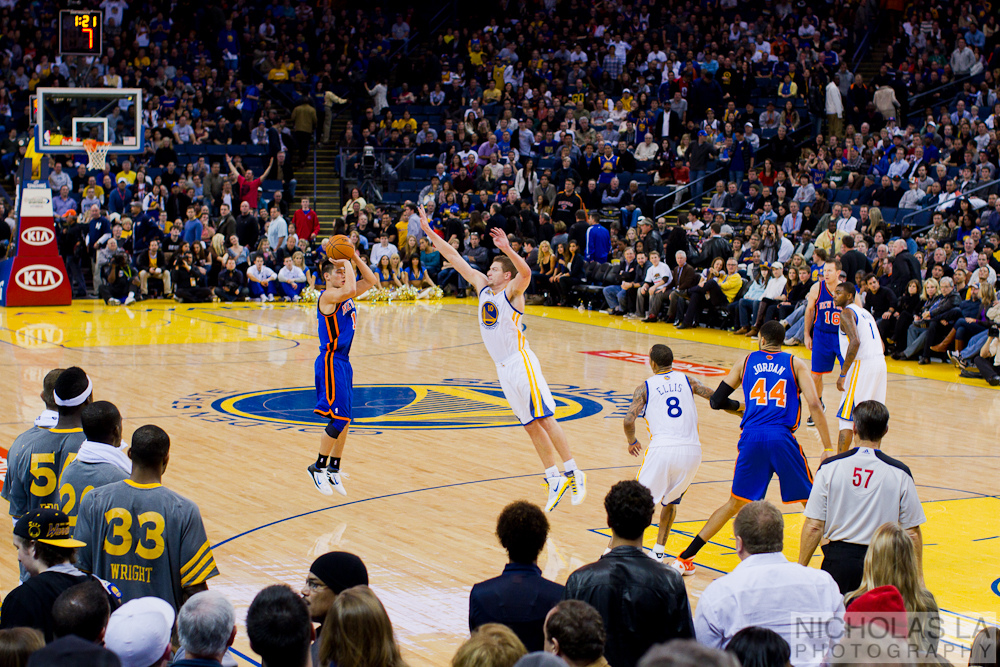
Image: “Jeremy Lin” by nikk_la via Wikimedia Commons, used under CC BY 2.0.