What Is Diwali? The Festival of Lights, the Five Days, and the Food
If you have ever walked past a home glowing with rows of tiny oil lamps, caught the smell of frying sweets drifting from a kitchen in late autumn, or seen fireworks bloom over a city on a November night, you have brushed up against Diwali. So what is Diwali, exactly? It is the festival of lights, the most widely celebrated holiday across South Asia and its diaspora, and in 2026 its main night falls on Sunday, November 8. But Diwali is bigger than a single date. It is a five-day arc of ritual, food, and family, carried by more than a billion people across several religions and dozens of regional traditions. Here is what it means, how it unfolds, and what ends up on the table.
What Diwali celebrates
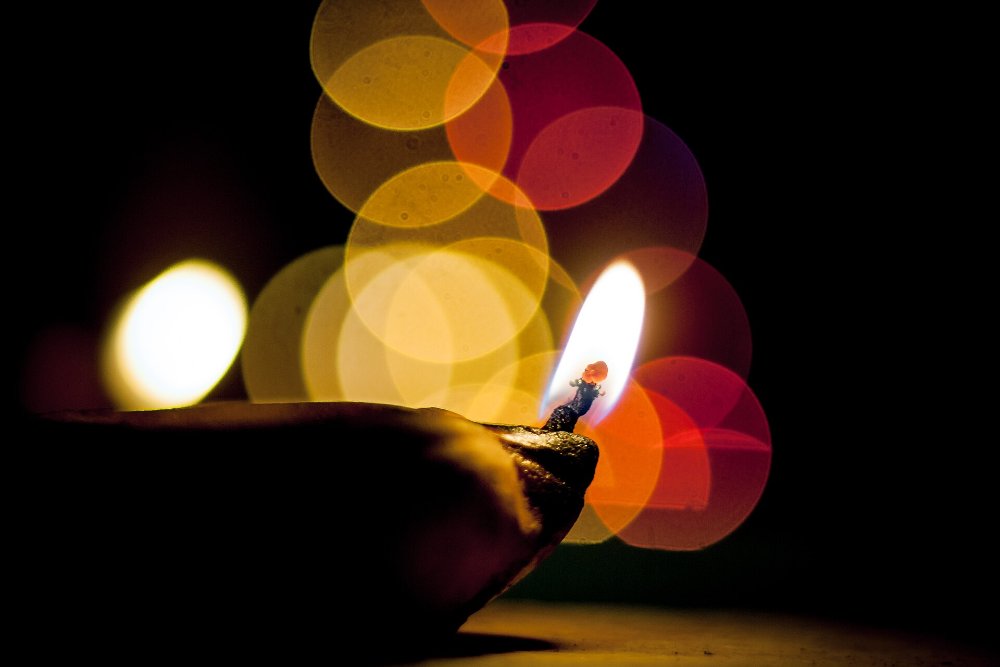
The name says a lot. Diwali, or Deepavali, comes from Sanskrit and means roughly a row or series of lights. At its heart the festival marks the victory of light over darkness, good over evil, and knowledge over ignorance. The lamps are not just decoration. They are the whole idea, made visible.
There is no single origin story, and that is part of what makes Diwali so rich. In much of northern India, it celebrates the return of Lord Rama to the kingdom of Ayodhya with his wife Sita and brother Lakshmana, after fourteen years of exile and the defeat of the demon king Ravana. The people are said to have lit rows of lamps to guide them home, and the festival reenacts that welcome every year. In southern India, the focus often falls on Krishna defeating the demon Narakasura, a victory that frees the world from tyranny. Across regions, Diwali is also the night to honor Lakshmi, the goddess of wealth and prosperity, and Ganesha, the remover of obstacles. In Bengal and parts of eastern India, the same night centers on the worship of the goddess Kali.
Diwali is not only a Hindu festival, either. Jains mark it as the day Mahavira, the last of their great teachers, attained moksha, or final liberation. Sikhs observe Bandi Chhor Divas, which falls on the same night and commemorates the release of Guru Hargobind from imprisonment, along with the fifty-two kings he secured freedom for. Newar Buddhists in Nepal celebrate with their own worship of Lakshmi. Different stories, different communities, one shared image of light pushing back the dark.
The five days of Diwali
Diwali is often called a single day, but the full celebration runs across five, each with its own purpose. The main night, Lakshmi Puja, is the anchor, and the days around it build toward it and wind down from it. Because the Hindu calendar is lunisolar, the exact dates shift each year, and the final days in particular can move by a day depending on the regional almanac, or panchang. Here is the 2026 sequence.
A Woven Guide
The five days of Diwali 2026
Dhanteras
Homes and shops are cleaned and the first lamps are lit. Families shop for gold, utensils, and new things to invite prosperity.
Choti Diwali
Also called Naraka Chaturdashi. An early-morning oil bath, prayers for liberation from evil, and the first rounds of sweets and visits.
Diwali
The main night. Every lamp is lit, families perform Lakshmi Puja at dusk, fireworks go up, and feasts and mithai are shared.
Govardhan Puja
Annakut, a “mountain of food,” is prepared and offered. In many regions it honors Krishna lifting Govardhan Hill.
Bhai Dooj
A celebration of the bond between sisters and brothers, marked with prayers, a shared meal, and gifts.
Dates follow the Hindu lunisolar calendar and can shift by a day; the final days in particular vary by region and panchang. Always check a local calendar.
The food: sweets, light, and sharing
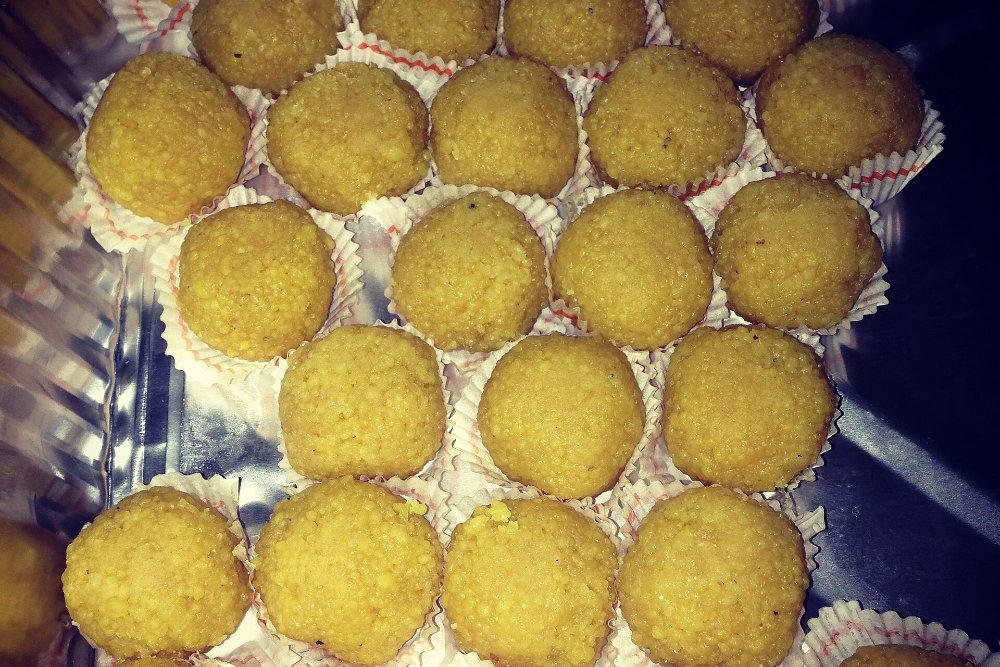
No festival in the Indian calendar is more tied to food than Diwali, and no food is more central than mithai, the broad family of Indian sweets. Giving and sharing sweets is the social heartbeat of the holiday. Boxes of mithai travel between neighbors, relatives, and coworkers, a small edible way of wishing someone prosperity and joy. Homes fill with the smell of ghee, sugar, and cardamom for days.
The sweets are only half the spread. Savory snacks, known broadly as namkeen, balance the sugar: crisp spirals of chakli or murukku, flaky mathri, samosas, and spiced snack mixes like chivda. Many families spend the week before Diwali cooking in batches, and the Govardhan Puja day even has a tradition called Annakut, literally a mountain of food, where dozens of dishes are prepared and offered. Below are some of the sweets you are most likely to meet.
On the Table
A field guide to Diwali sweets and snacks
| Treat | What it is |
|---|---|
|
Ladoo Sweet |
Round balls of flour, ghee, and sugar. The shape is a symbol of completeness and prosperity. |
|
Kaju katli & barfi Sweet |
Fudge-like squares. Kaju katli is made from cashews; barfi from sweetened milk solids. |
|
Jalebi Sweet |
Bright spirals of fried batter soaked in syrup. Crisp on the outside, sticky within. |
|
Gulab jamun Sweet |
Soft fried milk-solid balls served warm in rose-and-cardamom syrup. |
|
Soan papdi Sweet |
Light, flaky cubes with an almost cotton-candy texture. |
|
Chakli & murukku Savory |
Crisp, spiraled, savory fried snacks popular across the south and west. |
|
Samosa & mathri Savory |
Fried savories: samosas stuffed with spiced potato, mathri crisp and flaky. |
|
Chivda Savory |
A spiced snack mix of flattened rice, nuts, and seeds, also known as Bombay mix. |
The traditions: lamps, rangoli, and a spotless home
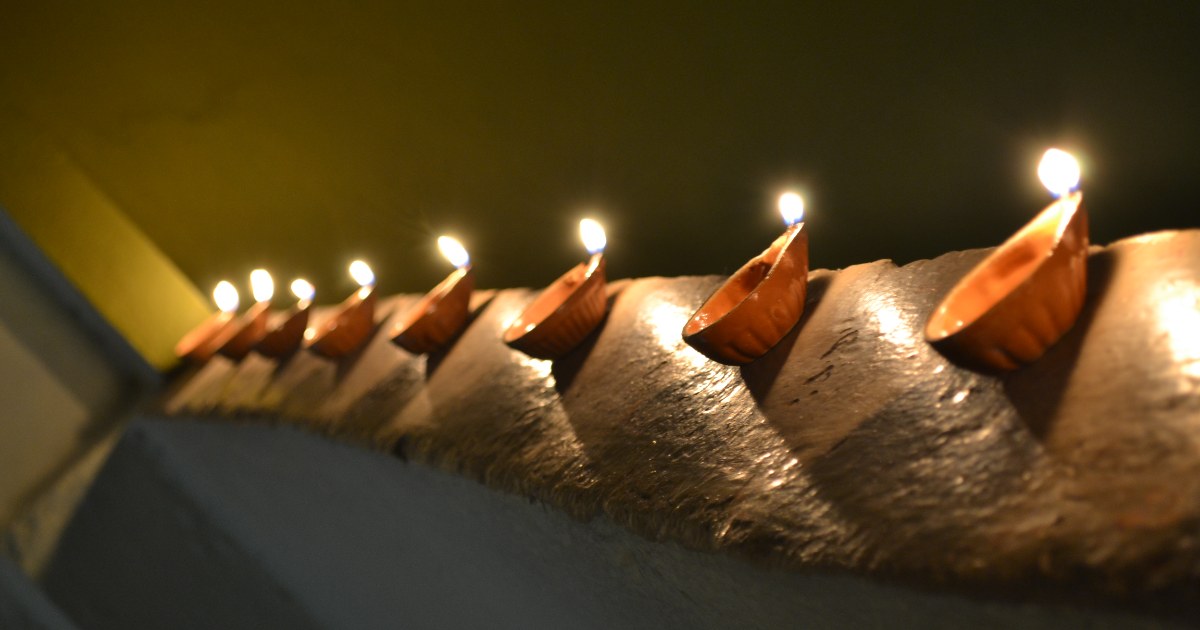
The signature of Diwali is the diya, a small clay oil lamp. Families line them along windowsills, doorways, balconies, and courtyards, so that whole streets flicker after dark. Candles and electric string lights have joined them, but the little clay lamp is still the soul of the festival.
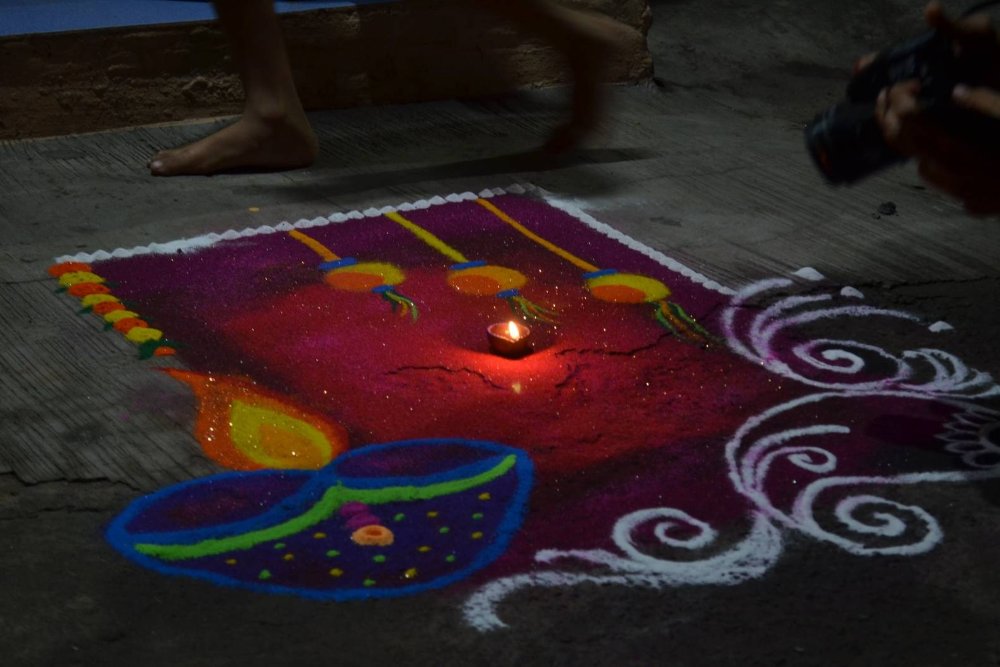
Just as iconic is rangoli, the colorful patterns made on floors and doorsteps from colored powder, rice, flower petals, or sand. They are meant to welcome guests and invite Lakshmi inside, which is also why so much of the run-up to Diwali is spent cleaning. Scrubbing and even renovating the home is part of the ritual, a way of making a bright, orderly space for prosperity to enter. Many people buy new clothes for the main night, exchange gifts, and set off fireworks, though a growing number of families are scaling back the fireworks over air-quality and safety concerns and leaning harder into lamps and lights instead.
On the main night, families gather at dusk for Lakshmi Puja, a prayer that invites wealth and well-being into the home for the year ahead. It takes place on the darkest night of the lunar month, the new moon, which is exactly why the lamps matter so much.
Diwali in America
For the South Asian diaspora, Diwali has become one of the clearest ways to carry culture across generations, and in the United States it is moving steadily into the mainstream. The White House now hosts Diwali celebrations. New York City added Diwali to its public school holiday calendar, with students first getting the day off in 2024, and Pennsylvania has recognized it as a state holiday. Times Square has hosted its own Deepavali festival. For many Asian American families, Diwali in the States looks a little different from Diwali back home, a temple visit, a potluck of regional dishes, a video call with grandparents lighting lamps on the other side of the world, but the center holds. The lamps still go in the window.
How to wish someone a happy Diwali
The simplest greeting is the one you already know: Happy Diwali. You will also hear Shubh Deepavali, which means auspicious Diwali, and because the festival begins a new year in several regional calendars, many families exchange new-year wishes too, like Saal Mubarak in Gujarati households. There is no wrong way to say it. And if a neighbor sends over a box of sweets, the warmest response is simple: take them, say thank you, and send some back when you can.
That may be the most quietly powerful thing about Diwali. Strip away the regional legends and the differences of faith, and what remains is a single, almost universal gesture: when the nights get long and dark, you make light, and you share it. You clean your home, you feed your neighbors, you forgive what you can, and you start the new season brighter than you ended the last. You do not have to grow up with Diwali to understand that. You just have to have waited out a long dark and wished for the light to come back.