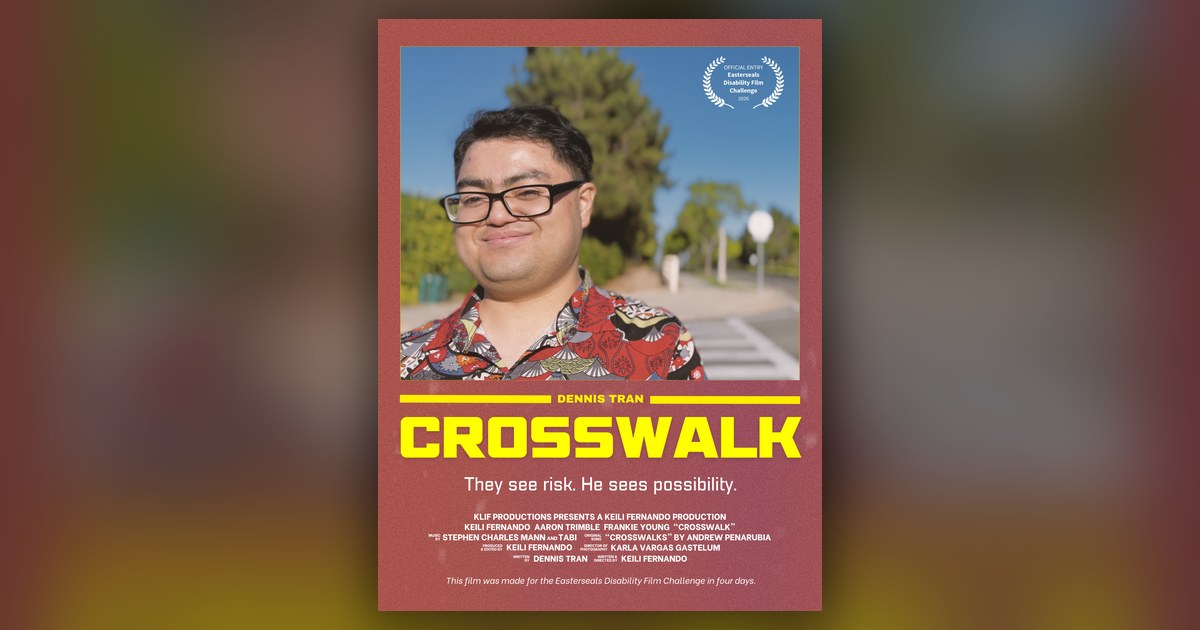
Dennis Tran Made the Autistic Asian American Character He Never Got to See
The Vietnamese American filmmaker on his late autism diagnosis, the silence around disability in many immigrant families, and why he made his short film “Crosswalk” on his own terms.
Dennis Tran was 27 when he was diagnosed with autism. He expected the diagnosis to explain a lifetime of moments that had never quite made sense. What he did not expect was that it would feel like a homecoming.
A queer, partially blind Vietnamese American storyteller based in Los Angeles, Tran spent more than a decade working across public health, disability advocacy, and nonprofit leadership before turning to film. He has consulted on inclusive representation in children’s media, including Lavender, the first autistic character on “Blue’s Clues & You!” But “Crosswalk,” the short he wrote and stars in, directed by Keili Fernando, was the first time he told a disability story entirely from his own perspective.
Made for this year’s Easterseals Disability Film Challenge, “Crosswalk” follows Lewis, an autistic Asian American man navigating an ordinary moment that grows complicated under the weight of assumptions and family expectations. This July, for Disability Pride Month, we are spotlighting Tran and “Crosswalk.” We talked with him about his late diagnosis, the silence around disability that runs through so many immigrant households, and why creative ownership mattered so much for a story this personal.
This conversation has been lightly edited for length and clarity.
Can you walk us through your path to filmmaking? Your autism diagnosis at 27 was a turning point. How did that experience shape the storyteller you became?
My path to filmmaking wasn’t traditional. Before entering independent film, I spent over a decade working across public health, healthcare, disability advocacy, nonprofit leadership, and media. Looking back, storytelling was always the common thread.
Growing up as a partially blind Vietnamese American raised by a single mother in a low-income household, I often felt caught between identities and expectations. Vulnerability wasn’t something that was encouraged. Like in many Asian American families, survival, sacrifice, and resilience were prioritized over conversations about emotions, disability, or mental health.
Storytelling became one of the ways I learned to understand myself and connect with others. I grew up playing video games, watching movies and television, and following some of the first generation of mainstream Asian American YouTubers. (Anyone remember Wong Fu Productions?) Those stories made me feel less alone and showed me the power of representation long before I understood why it mattered.
Receiving my autism diagnosis at 27 was a turning point. I expected it to be an explanation for many of the experiences I’d had throughout my life. And it was. But more than that, it was a homecoming.
It helped me understand that many of the qualities I had spent years questioning, like my deep empathy, creativity, pattern recognition, and sense of justice, were actually strengths. Filmmaking became a way to transform lived experience into something others could see and feel. “Crosswalk” was my first opportunity to move beyond advocacy and consulting and start shaping the representation I wished I’d had growing up.
I expected it to be an explanation. And it was. But more than that, it was a homecoming.
Dennis Tran
You’ve spoken about navigating multiple identities at once, as a Vietnamese American, as an autistic person, and as an artist. How do those identities intersect for you, and did one come into focus before the others?
For much of my life, those identities existed separately, because I didn’t fully understand them.
I grew up knowing I was Vietnamese American and understanding the responsibilities and sacrifices that come with being the child of immigrants. Later, after I was diagnosed with glaucoma as a teenager at 17, disability became another lens through which I experienced the world.
Autism didn’t come into focus until much later. When I was diagnosed at 27, it felt less like discovering something new and more like finally finding a missing piece of myself. Suddenly, many experiences throughout my life made sense.
Today, I don’t separate those identities. My experiences as a first-gen, low-income, disabled, neurodivergent, queer Vietnamese American shape the stories I’m drawn to tell and the communities I care about. They’ve taught me that identity isn’t a collection of separate boxes. It’s an intersection of experiences that influence how we move through the world. That’s one reason representation matters so much to me. We’re all complex, multidimensional people who deserve to be seen and represented fully.
The idea of a culturally imposed silence around disability comes up often in Asian American families. Did that silence shape your own upbringing, and how has your relationship to it changed over time?
My family’s story is shaped by war, displacement, survival, and sacrifice. Conversations about disability, mental health, or neurodiversity weren’t common, because survival came first. When you’re focused on paying bills, caring for family, and building a life in a new country, there often isn’t space to explore why someone experiences the world differently.
As a result, many of my struggles were misunderstood. Some were seen as personality flaws, or things I simply needed to work harder to overcome. I internalized a lot of shame and spent years masking who I was.
Over time, I’ve learned that silence isn’t always intentional. Often it’s inherited. It can come from stigma, lack of information, cultural expectations, or simply not having the language for these conversations.
Today, storytelling is one of the ways I help break that cycle. Every time we share our experiences, we create opportunities for understanding and connection. We give others permission to see themselves reflected, and to start conversations that previous generations may never have had the chance to have.
Silence isn’t always intentional. Often it’s inherited.
Dennis Tran
What did you feel was missing or getting overlooked in how mainstream media portrayed Asian Americans, autistic people, or both, that you wanted your own work to address?
What I felt was missing was complexity.
Some of my earliest experiences of belonging came through stories, whether that was video games, movies, television, or the first generation of Asian American creators online. Those spaces showed me what representation could feel like, but I still rarely saw people who fully reflected my experiences.
Asian Americans were often reduced to stereotypes. Disabled and autistic characters were frequently portrayed as inspirational, tragic, or defined entirely by their diagnosis. I almost never saw someone who existed at the intersection of those identities: a disabled Asian American, an autistic person of color, or someone navigating culture, family expectations, disability, and belonging all at once.
I wanted to create the kind of representation I needed growing up. Stories where disabled and neurodivergent people are fully human. Stories where disability is part of the character’s experience but not the entirety of who they are. Stories where people like us get to be funny, creative, resilient, flawed, and multidimensional.
Tell us about “Crosswalk.” What is the story at its center, and where did the idea first come from?
“Crosswalk” is a story about communication, difference, cultural stigma, belonging, and the misunderstandings that can happen when people make assumptions about one another.
The film follows Lewis, an autistic and neurodivergent Asian American man navigating what seems like an ordinary interaction that becomes complicated by communication differences and generational perspectives as he asserts his independence as a disabled person.
While the story is fictional, it’s deeply rooted in my own experiences as an autistic, partially blind Vietnamese American who got hit by a car while crossing the street in LA, a few months before I discovered I was autistic in 2020.
Growing up, I often found myself misunderstood. People would interpret my actions or communication in ways I never intended, or my sensory challenges were seen as a weakness, as something I needed protecting from. After receiving my autism diagnosis, many of those experiences suddenly made sense.
I wanted to explore those everyday moments that many disabled and neurodivergent people experience, but that rarely make it onto screen. At its heart, “Crosswalk” is about empathy, connection, and the universal desire to be seen and understood.
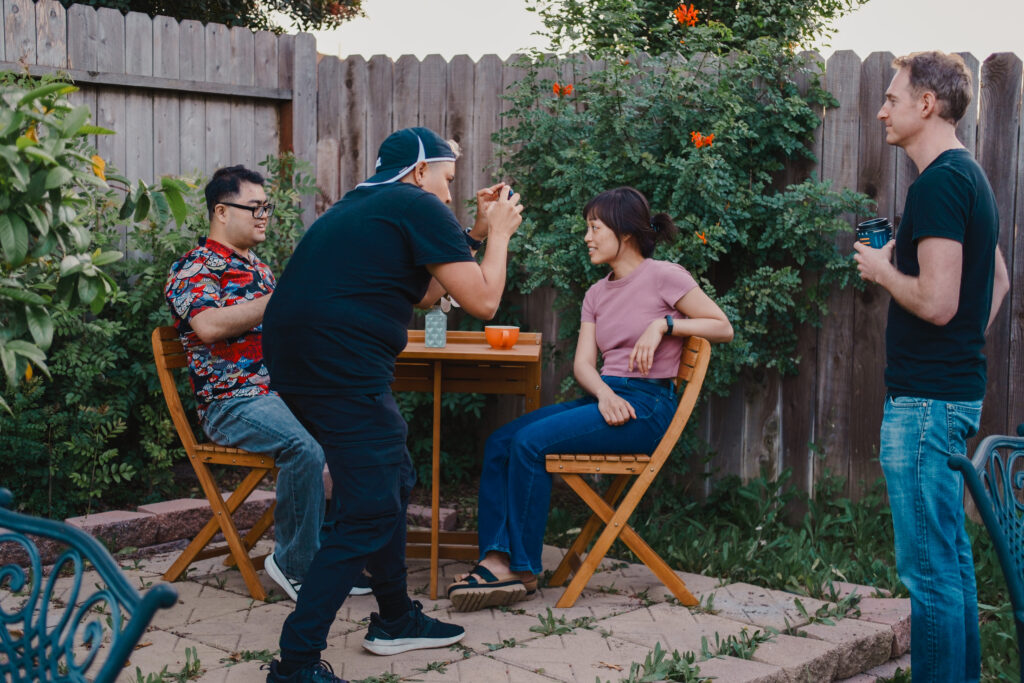
The film follows an Asian American autistic protagonist. What did you most want to get right in portraying him, and what portrayals were you consciously trying to avoid?
The most important thing was authenticity.
Because Lewis draws heavily from my own experiences, I wanted him to feel like a real person rather than a collection of symptoms. He’s autistic and neurodivergent, but he’s also thoughtful, funny, frustrated, hopeful, and human.
I was intentional about avoiding stereotypes. Too often, autistic characters are portrayed as emotionless, socially incapable, burdensome, or extraordinary geniuses. Those portrayals fail to capture the diversity and complexity of autistic experiences.
I wanted Lewis to exist beyond those narratives. His autism shapes how he experiences the world, but it isn’t the entirety of who he is. In many ways, he’s the character I needed when I was younger, because he reflects an experience I rarely saw represented authentically on screen.
You chose to make “Crosswalk” independently rather than through a studio. What did that creative control allow you to do that you might have lost otherwise?
Creative control allowed me to prioritize authenticity over assumptions.
Because “Crosswalk” was an independent project, we didn’t have to explain why the lead character was autistic or justify the inclusion of disability within the story. We could trust lived experience as the foundation and tell the story on our own terms.
That freedom let us focus on the nuances that often get overlooked: the small moments, the communication differences, the everyday experiences that felt true to life.
For me, authenticity was more important than scale. I wanted the story to feel honest, even if it was told through a small, intimate lens.
You also consulted on disability authenticity for “Blue’s Clues & You!” How did working within a mainstream children’s show compare to building something entirely your own, and what did each teach you?
Both experiences were meaningful, but in different ways.
Through “Blue’s Clues & You!” I had the opportunity to consult on Lavender, the franchise’s first autistic character. Working on a beloved children’s show taught me how powerful authentic representation can be when it’s integrated into a mainstream platform that reaches families around the world.
With “Crosswalk,” I had the opportunity to tell a story directly from my own perspective. Rather than advising on someone else’s vision, I could draw from my lived experiences and create something deeply personal.
Together, those experiences reinforced something I strongly believe: representation matters both behind the scenes and in front of the camera. We need disabled people helping shape stories, and we need disabled people telling our own stories as well.
What do you hope viewers take away from the film, especially young Asian Americans who are neurodivergent or living with a disability?
I hope they see themselves.
Growing up, I rarely saw people who shared my experiences represented authentically. I spent a lot of time wondering why I felt different, and whether there was a place for someone like me.
If “Crosswalk” helps even one young person feel seen, understood, or less alone, then it’s accomplished something meaningful.
For everyone else, I hope the film encourages empathy. Many barriers aren’t created by disability itself. They’re created by misunderstanding. When we make space for different ways of communicating, thinking, and existing, we create communities where everyone can belong.
At its heart, “Crosswalk” is a reminder that we all want the same thing: to be seen, understood, and accepted for who we are.
What is next for you and for “Crosswalk”?
We’re currently exploring opportunities to bring “Crosswalk” to more audiences through film festivals, community screenings, educational programming, and conversations around disability representation.
For me personally, this is just the beginning. I plan to keep working across filmmaking, storytelling, public health, disability advocacy, speaking, acting, and entertainment consulting to help expand authentic representation both on and off screen.
My hope is that the film serves as a starting point for larger conversations about disability, belonging, intersectionality, and the power of seeing ourselves reflected in the stories we tell.
“Crosswalk” was written by Dennis Tran and directed by Keili Fernando, a KLIF Productions film made for the Easterseals Disability Film Challenge. Watch it on YouTube. Follow Dennis Tran’s work on his website, Instagram, and LinkedIn.
Related on Woven: 10 Asian American Memoirs Everyone Should Read in 2026 and 5 of the Best 2020s Martial Arts Movies With Asian Leads.