Bernie Su’s ‘Whispers’ and What Asian American Storytelling Looks Like at the AI Frontier
Bernie Su has spent more than a decade making things that didn’t exist before he made them. The Peabody and three-time Primetime Emmy-winning creator co-created The Lizzie Bennet Diaries with Hank Green in 2012, a Jane Austen adaptation for YouTube that became the first web series to win a Primetime Emmy — and arguably the project that proved digital narrative could be taken seriously by traditional television. He followed it with Emma Approved, then Artificial, which became Twitch’s most decorated interactive series, and a series of formats that quietly redefined what counted as a “show.” Now he’s at the front of the next argument, and it’s the most contentious one yet: what AI-driven entertainment looks like when an Asian American creator with Emmy-winning craft is the one shaping it.
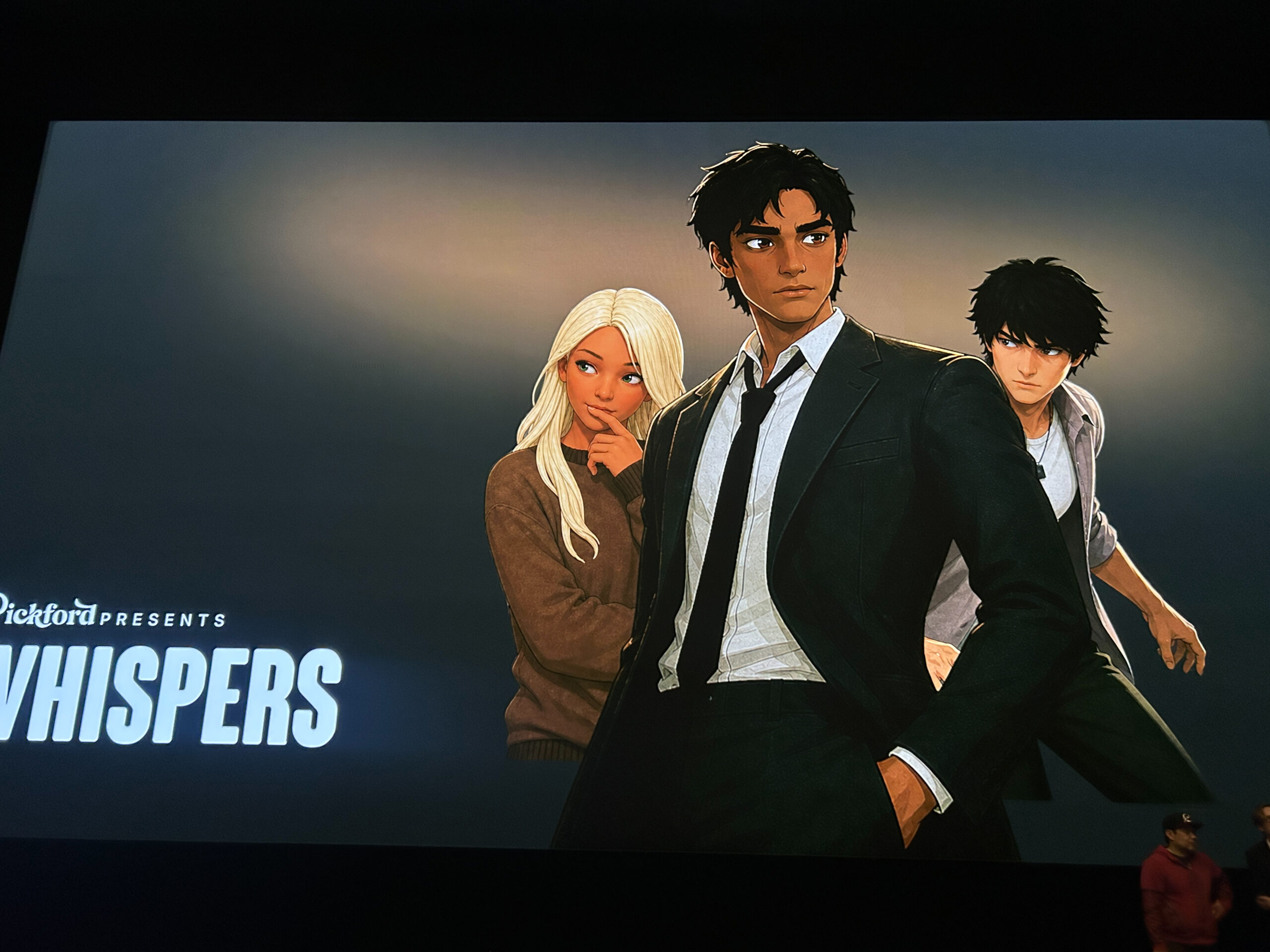
The project is Whispers — Bernie Su Whispers, the interactive AI murder mystery he is showrunning for Pickford AI. Variety first reported the partnership in May 2025. The series debuted at Cannes Next in May 2025, followed by an interactive showcase at the Busan Asian Contents & Film Market in September 2025. As of May 2026, Whispers has expanded into limited theatrical screenings — a move Forbes characterized as “a new kind of AI-informed cinema”. Audiences participate live through a phone interface, communicating with AI-powered characters in real time, working together or against each other to identify a killer before he confesses — or doesn’t. The voice cast includes Stephen Chang (The Last of Us Part II, Bosch: Legacy), Tohoru Masamune (Teenage Mutant Ninja Turtles, Never Have I Ever), Brandon Soo Hoo (Tropic Thunder, NCIS: Los Angeles), Heavenly Reyna (The Bold and The Beautiful), and Jennifer Field (General Hospital). It is, by some distance, one of the most ambitious AI entertainment projects an Asian American creator has ever led.
The Career That Led Here
Su’s trajectory is worth understanding because it doesn’t look like anyone else’s in television. The Lizzie Bennet Diaries, co-created with Hank Green, ran on YouTube as a series of vlog-style entries from a fictional Lizzie Bennet, updating Pride and Prejudice for the social-media era. It won the 2013 Primetime Emmy for Outstanding Creative Achievement in Interactive Media — the first time YouTube had won a Primetime Emmy at all. Emma Approved followed, winning YouTube’s second Primetime Emmy two years later in 2015.
From there, Su moved deeper into interactive territory. Artificial, which he co-created with author Evan Mandery and ran on Twitch, became Twitch’s most decorated original program ever — winning a Webby, a Peabody, and another Primetime Emmy. The show centered on a sentient AI being raised in a laboratory, and audiences participated live in the experiments, shaping the narrative across multiple seasons. It was, in retrospect, a remarkably specific kind of training ground. By the time generative AI became the entertainment industry’s defining argument in 2023, Su had been thinking about the relationship between AI characters and live audiences for years.
What Bernie Su Whispers Is, Actually
The project is harder to describe than a conventional show because it isn’t one. Whispers is an interactive AI-driven murder mystery experience built on Pickford AI’s platform. The technology was developed by Stephen Piron and Cole Clifford. Piron previously co-founded the AI company Dessa, which sold to Square (now Block) in 2020 — a deal Variety reported as worth more than $100 million — where Piron and Clifford later worked together before launching Pickford AI in 2024.
The interaction model is the key. Audiences watching Whispers aren’t passive — they communicate with the AI-powered detective character through their phones, asking questions, offering theories, providing information. The AI characters respond in real time, with voices performed by the human voice cast and behavior shaped by Su’s writing. The story branches based on what the audience says and asks. The killer eventually confesses — or doesn’t — depending on how skillfully the collective investigation has been conducted. The format has now extended into limited theatrical screenings, where audiences participate through their phones while watching the projected experience together.
Su has described it directly: “What you’re about to see, this experience, is a story experience that cannot be done without AI. It’s a new art form that, at its speed and at its fidelity, cannot be done without AI and the technology that Pickford pioneered.” That framing — that AI enables a kind of storytelling that genuinely couldn’t exist otherwise — is the strongest defense of AI in entertainment available, and the version of the argument that has the most chance of being right.
Bernie Su Whispers and AI in a Post-Strike Industry
You cannot write about Whispers honestly without acknowledging the context. AI in entertainment is the most contested industry topic of the decade. The 2023 SAG-AFTRA and WGA strikes were largely about whether and how AI could be used in film and television production — with serious unresolved tensions about voice cloning, likeness rights, and the long-term displacement of human creative workers. Many entertainment-industry professionals, including many Asian American actors and writers, view AI projects with serious skepticism — and a non-trivial number view them as adversarial.
Su has not tried to talk around any of this. In Variety’s reporting on the project, he was explicit: “We are using a voice with their approval. But some actors would pass, not because they were against AI, but they were concerned about the stigma that the audience would have against them.” The cast that did sign on did so within SAG-AFTRA’s new AI protocols, which Pickford was among the first companies to formally work within.
Heavenly Reyna, one of the voice cast members, was equally candid: “For me personally, I have a lot of reservations with AI just in the creative industry, but I trust Bernie, and I also trust his visions and his innovation. And I thought it was cool.” Her phrasing matters. Both things are true at once — the reservations are real, and the trust in this specific creator’s craft is also real. That’s the honest version of where the industry is, and a project led by someone with Su’s track record is one of the few places that nuance can actually be tested.
Why Asian American Leadership Here Matters
The history of American entertainment is full of Asian American creators who built form-defining work and didn’t get full credit for it until much later. Wayne Wang’s Chan Is Missing in 1982 was foundational independent film. James Wong Howe was one of the most consequential cinematographers of the 20th century. The Daniels won Best Director and Best Picture in 2023 for Everything Everywhere All at Once. The same shift has been visible in stand-up — see our roundup of Asian American stand-up specials worth watching — and in literary nonfiction (our list of 10 essential Asian American memoirs covers that ground). Bernie Su’s name belongs in serious conversations about who has shaped the last fifteen years of interactive and digital narrative — and the lack of broader public recognition of that fact is its own story.
Whispers is meaningful in part because it places an Asian American creator at the frontier of an emerging form, rather than in a follower role to whatever frontier non-Asian creators are establishing. The AI entertainment conversation is being defined right now — by who gets to lead the high-profile projects, by what ethical frameworks become standard, by which use cases the industry accepts as legitimate. Having Su in a showrunner role on one of the field’s most-watched projects means the precedents being set are partly his to define. The SAG framework, the voice-actor consent model, the audience-driven narrative philosophy — these are choices that will shape what comes next.
What to Watch For
The questions Bernie Su Whispers is going to surface over the next year are the questions every AI-driven entertainment project will eventually have to answer. Can an interactive AI character carry sustained narrative weight, or does the format require a strong human-written through-line to feel meaningful? Will audiences engage repeatedly with branching stories, or will the novelty wear off after one experience? Will the SAG framework hold as more companies enter the space, or will the bigger players try to route around it? And — the question that matters most for the industry as a whole — will AI-enabled formats produce work that’s genuinely good, or will they produce technically impressive demonstrations that don’t quite cohere as stories?
The answer to all of these will partly depend on whether Whispers succeeds. Not commercially — Pickford AI is well-funded and the project has runway regardless. But artistically: whether the experience makes audiences feel something the conventional formats can’t, whether the interactive participation feels meaningful or gimmicky, whether the AI characters are believable enough to hold up the dramatic weight of a murder mystery. Su’s track record suggests it has a real chance.
Bernie Su and Whispers: One More Thing
The most useful frame for Asian American audiences thinking about Whispers is that the project’s significance isn’t only the AI part. It’s that the AI part is being defined right now, in public, by a creator whose previous work won three Primetime Emmys and pioneered formats that the rest of the industry eventually had to catch up to. The argument for whether AI belongs in serious creative work will be litigated for the rest of the decade. Su is one of a small number of creators who has the standing to make the affirmative case credibly — and the craft to make it stick. Whether Whispers turns out to be the project that legitimizes the form, or just an early experiment that gets refined by later work, is too soon to know. What’s already clear is that the conversation is going to include him, and that’s a meaningful shift from how this conversation could have gone.
Frequently Asked Questions
Who is Bernie Su?
Bernie Su is a Peabody Award-winning and three-time Primetime Emmy-winning creator, director, and showrunner specializing in interactive and digital narrative. His credits include The Lizzie Bennet Diaries (the YouTube series that won the platform’s first Primetime Emmy), Emma Approved, and Artificial (Twitch’s most decorated original program). He currently serves as Head of Creative at Pickford AI and as the creator and showrunner of Whispers.
What is Whispers?
Whispers is an interactive AI-driven murder mystery experience built on the Pickford AI platform. Audiences participate live by communicating with AI-powered characters — including a detective and potential suspects — through their phones, attempting to draw a confession from a killer through collective investigation. The voice cast performs the AI characters within SAG-AFTRA’s framework for AI projects.
Is Whispers in theaters?
As of May 2026, Whispers is screening in limited theatrical venues, with the screening format combining the projected experience with phone-based audience participation. The project initially debuted at the Cannes Film Market and the Busan Asian Contents & Film Market as an interactive showcase, then expanded into theatrical screenings — a format Forbes characterized in May 2026 as a new kind of AI-informed cinema. Audiences in those screenings still use their phones to participate in the live, branching narrative.
How does Whispers handle AI ethics and actor consent?
According to Variety’s reporting, Pickford AI and Bernie Su built Whispers within SAG-AFTRA’s newly established framework for AI projects, with explicit voice-actor consent for all AI-generated voice performances. Su has publicly acknowledged that some actors declined to participate due to concerns about audience perception of AI-involved projects, even when they were not opposed to AI itself.