Filipino restaurants Los Angeles has built over decades reflect the second-largest Filipino American population in the United States, and for decades the LA community quietly fed itself — at turo-turo steam tables, at lechon stands in Carson and Eagle Rock, at family-run spots that didn’t need a Yelp page to stay full. That era isn’t over, but something new has layered on top of it. A generation of Filipino and Filipino American chefs is now running some of the most exciting restaurants in the city, full stop — not just the best Filipino restaurants, but the best restaurants.
Here’s where to eat right now, from James Beard winners to legendary strip-mall institutions.
East Hollywood
The name to know. Chef Lord Maynard Llera won the James Beard Award for Best Chef in California in 2024, and the recognition was overdue. His fast-casual spot in East Hollywood serves regional Filipino dishes rooted in his hometown of Lucena City, Quezon Province — lucenachon (a whole fried pork belly that will haunt you — made with the same ingredients you can find at any
well-stocked Asian pantry), hiramasa collar, garlicky prawns, and a rotating specials menu that rewards repeat visits. The portions are generous, the prices are surprisingly reasonable for the quality, and the palm vinegar Llera ages himself is reason enough to make the trip. The LA Times has included it on its 101 Best Restaurants list three years running. Go early, or call ahead.
Chinatown (Far East Plaza)
What started as Lasa — an elevated Filipino tasting menu that LA Times critic Jonathan Gold praised for a menu that “vibrates with the flavors of the Philippines” — has evolved into something more relaxed and arguably more fun. Owners Chase Valencia and Steff Barros Valencia reworked the concept into a Filipino rotisserie and wine bar with a youthful energy and a menu built around two things done extraordinarily well: chicken inasal and pork belly lechon. The atchara (pickled vegetables) is exceptional. The natural wine list is genuinely good. If there’s a more enjoyable way to spend two hours in a dining room in Los Angeles right now, it’s hard to name it.
Silver Lake
What began as a family catering operation serving aluminum trays at birthdays and baptisms is now one of the most talked-about Filipino restaurants in the city. Chef Natalia Moran brings modern flair to classic Filipino dishes — stewed taro and coconut milk reimagined as a creamy dip with housemade focaccia, a crab-stuffed tortang talong with aioli and fish roe, pork belly sisig that disappears from the table faster than it arrives. On weekends, there’s live music. Sometimes local musicians, sometimes the owner’s dad with a guitar under a neon sign. The vibe is communal and warm in a way that feels specifically Filipino, in the best possible sense.
Downtown LA (Arts District)
Named for sampaguita — the national flower of the Philippines — Sampa took the long road to a permanent home. Chef Josh Espinosa and co-owner Jenny Valles launched as a delivery concept, ran pop-ups across the city, and finally landed in the Arts District at the end of 2024. The food is inventive and bold: octopus adobo, lamb kaldereta tortellini, crab fat fried rice. Brunch brings a chicken and pandan waffle and biscuits with longanisa gravy that should be more famous than they are. If you’ve been sleeping on Filipino brunch, Sampa is the wake-up call.
Echo Park
Filipino-American BBQ fusion sounds like a concept that shouldn’t work as well as it does, but The Park’s Finest has been proving skeptics wrong for years. The 16-hour smoked coconut beef adobo — chuck braised in coconut cream and fish sauce until it falls apart — is the dish to order, though the longanisa hot links and slow-roasted pulled pork are also exceptional. The atmosphere pays homage to Echo Park potluck culture, which means it feels like a gathering even when you’re eating alone.
Multiple Locations
A Filipino street food truck turned grab-and-go restaurant where most items are $1.50. You pick your skewers, finish charring them on charcoal grills in the parking lot, and eat standing up with large groups of families doing the same thing. The isaw (grilled pork intestine) is excellent. The betamax (congealed pig’s blood) and enrile (fried chicken head) are for the adventurous. The vinegary house barbecue sauce makes everything better. This is what Filipino street food actually looks and feels like, without pretense or markup.
Eagle Rock
Chef-owners Jun and Vener have made this Eagle Rock mainstay one of the most dependable turo-turo spots in Northeast LA. The steam-table spread runs deep — sisig that regulars rave about, lechon kawali, kare-kare — plus a rotating lineup of seafood like fried bangus and sinigang that gives non-pork eaters real options. Big, family-style portions, and far enough off the tourist track to feel like the real deal.
East Hollywood
A neighborhood institution that’s been feeding the Filipino American community in Historic Filipinotown for decades. The menu is a greatest hits of Filipino home cooking — sinigang, kare-kare, dinuguan, pancit canton — executed with the kind of consistency that only comes from cooking the same dishes for years. No frills, no chef’s-table ambitions, just very good Filipino food at fair prices in the neighborhood where Filipino Los Angeles began.
Historic Filipinotown
A Historic Filipinotown fixture for Filipino comfort food, Tita Lina’s is the kind of place the regulars don’t want written about because it means more competition for tables. The lechon kawali is among the best in the city — crackling skin, tender fatty pork underneath — and the bangus (milkfish) is prepared with the care it deserves. Portions are generous, prices are honest, and the warmth of the service feels genuinely familial.
Historic Filipinotown
A nod to both high-fidelity audio and the neighborhood that raised him, founder Justin Foronda’s HiFi Kitchen feels like a place that’s about to pop off any minute. The menu is proudly Filipino Angeleno — rice bowls, silogs, tocino-pastor tacos, and vegan riffs like veggie sisig — but the pork sisig is the move: sizzling roast pork chopped with onions and peppers, finished with chili oil and a house crema. A former b-boy and nurse turned restaurateur, Foronda opened the place partly to make the case that Historic Filipinotown deserves the same cultural spotlight as Little Tokyo or Koreatown. Worth watching, and worth the trip.
One More Thing
The Filipino food scene in Los Angeles is moving fast. Restaurants that weren’t on anyone’s radar two years ago are now getting national attention. Chefs who trained at Bestia and Republique are opening places rooted in the food they grew up eating. If there’s a single cuisine that represents the current energy of LA dining — ambitious, rooted in immigrant tradition, increasingly recognized on its own terms — it’s Filipino food.
Kumain ka na? You should.
Filipino cuisine in Los Angeles has received growing critical attention in recent years, with food writers noting the depth and variety of a culinary tradition that long predates its mainstream discovery. Read more:
Eater LA’s guide to Filipino restaurants.
Frequently Asked Questions
What makes Filipino cuisine unique among Asian cuisines?
Filipino cuisine is unique for its bold use of acid — vinegar, calamansi, tamarind — as a primary flavor component. It also incorporates Spanish, Chinese, and Malay influences accumulated over centuries of trade and colonization, producing a cuisine that does not fit neatly into any single Asian culinary tradition.
What dishes should I order at a Filipino restaurant for the first time?
Start with adobo (pork or chicken braised in vinegar, soy sauce, and garlic), sinigang (sour tamarind soup), and kare-kare (oxtail stew in peanut sauce). For fried options, lechon kawali (crispy fried pork belly) is essential. Sisig — sizzling chopped pork — is a must-try as well.
Why is Los Angeles significant for Filipino food in America?
Los Angeles has the second-largest Filipino American population in the United States, with deep community roots in cities like Carson, Daly City, and various LA neighborhoods. This population base has supported Filipino cuisine for decades and is now fueling a new generation of Filipino chefs with national recognition.
What is boodle fight and where can I experience one in LA?
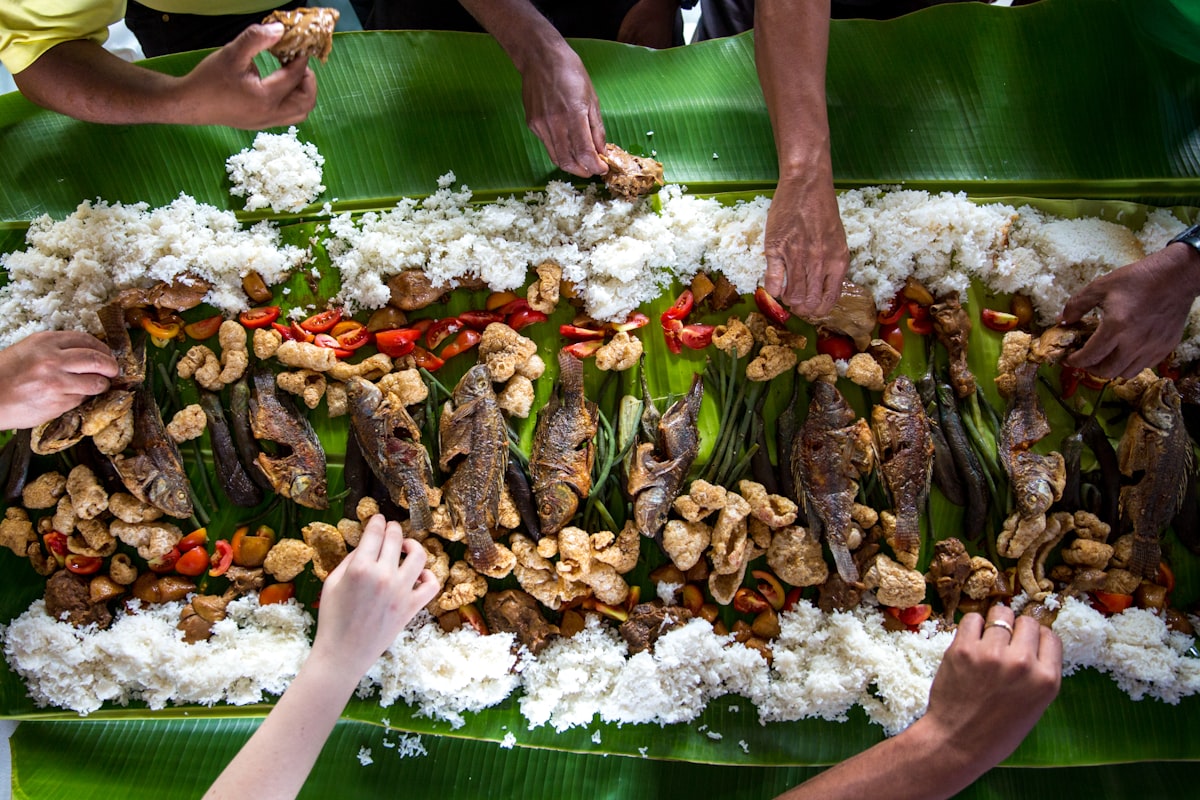
A boodle fight is a traditional Filipino communal eating style where food is spread on banana leaves on a long table and everyone eats together without utensils, using their hands. Several Filipino restaurants in Los Angeles offer boodle fight experiences, typically for groups and sometimes requiring advance reservation.
More Los Angeles dining guides