The Real Difference Between Japanese, Korean, and Chinese BBQ
Japanese Korean Chinese BBQ are three completely different culinary traditions that share almost nothing beyond the concept of meat and fire. Ask someone who’s only been to one kind what “Asian BBQ” is and they’ll describe what they know. Ask someone who’s been to all three and they’ll tell you the question doesn’t really work — because Japanese, Korean, and Chinese barbecue are as different from each other as Texas brisket is from Argentinian asado. They share a general concept: meat, fire, table. Everything else diverges.
Here’s what actually distinguishes them.
Japanese vs Korean vs Chinese BBQ at a Glance
The short version: Japanese yakiniku centers on grilling premium cuts yourself with minimal seasoning, Korean gogi-gui is communal tabletop grilling built around marinades and banchan, and Chinese BBQ, or siu mei, is roasted and lacquered meat prepared by chefs rather than grilled at your table.
| How they differ | Japanese (Yakiniku) | Korean (Gogi-gui) | Chinese (Siu Mei) |
|---|---|---|---|
| Core idea | Grill premium cuts yourself with minimal seasoning | Communal tabletop grilling built around marinades and sides | Meats roasted and lacquered by chefs, not grilled at the table |
| Signature dishes | Wagyu and other premium beef, plus offal | Galbi, bulgogi, samgyeopsal | Char siu, roast duck, soy sauce chicken, crispy pork |
| Seasoning | Light salt and a tare dipping sauce | Soy, garlic, sesame and sugar marinades, with ssamjang | Sweet and savory glazes using maltose, hoisin and five spice |
| How it is cooked | Charcoal or gas grill at your own table | Charcoal or gas grill at your own table | Roasted or barbecued in ovens, often hung whole |
| How it is eaten | Cut by cut, dipped, with rice | Wrapped in lettuce with banchan, shared | Sliced over rice or noodles, often as takeout |
| Where you eat it | At a restaurant grill table | At a social, communal grill table | At a roast meat shop or deli counter |
Japanese Korean Chinese BBQ: Starting With Yakiniku
Yakiniku — literally “grilled meat” — came to Japan largely through Korean influence, introduced by Korean immigrants in the early 20th century. What Japan did with it reflects something essential about Japanese food culture: an obsession with the quality of individual ingredients and an aesthetic of restraint.
In a yakiniku restaurant, the grill is typically charcoal or a specialized gas setup designed to minimize smoke and maximize even heat. The cuts are specific and precise — thin slices of wagyu short rib, tongue, harami (skirt steak), offal cuts like small intestine and stomach prepared with extraordinary care. The meat is often not marinated before grilling; the flavors come from the quality of the cut itself and from dipping sauces applied after.
The canonical yakiniku dipping sauce — tare — is typically soy-based, with mirin, sake, and sesame, sometimes with grated pear or apple for sweetness. Some restaurants offer multiple tares: a saltier one for fatty cuts, a sweeter one for leaner ones. The calibration is precise.
The experience is measured. You grill small amounts at a time, eat immediately, don’t let things overcook. Quality over quantity. A great yakiniku meal involves fifteen pieces of A5 wagyu and a conversation about each one.
Korean Gogi-gui: Communal and Maximalist
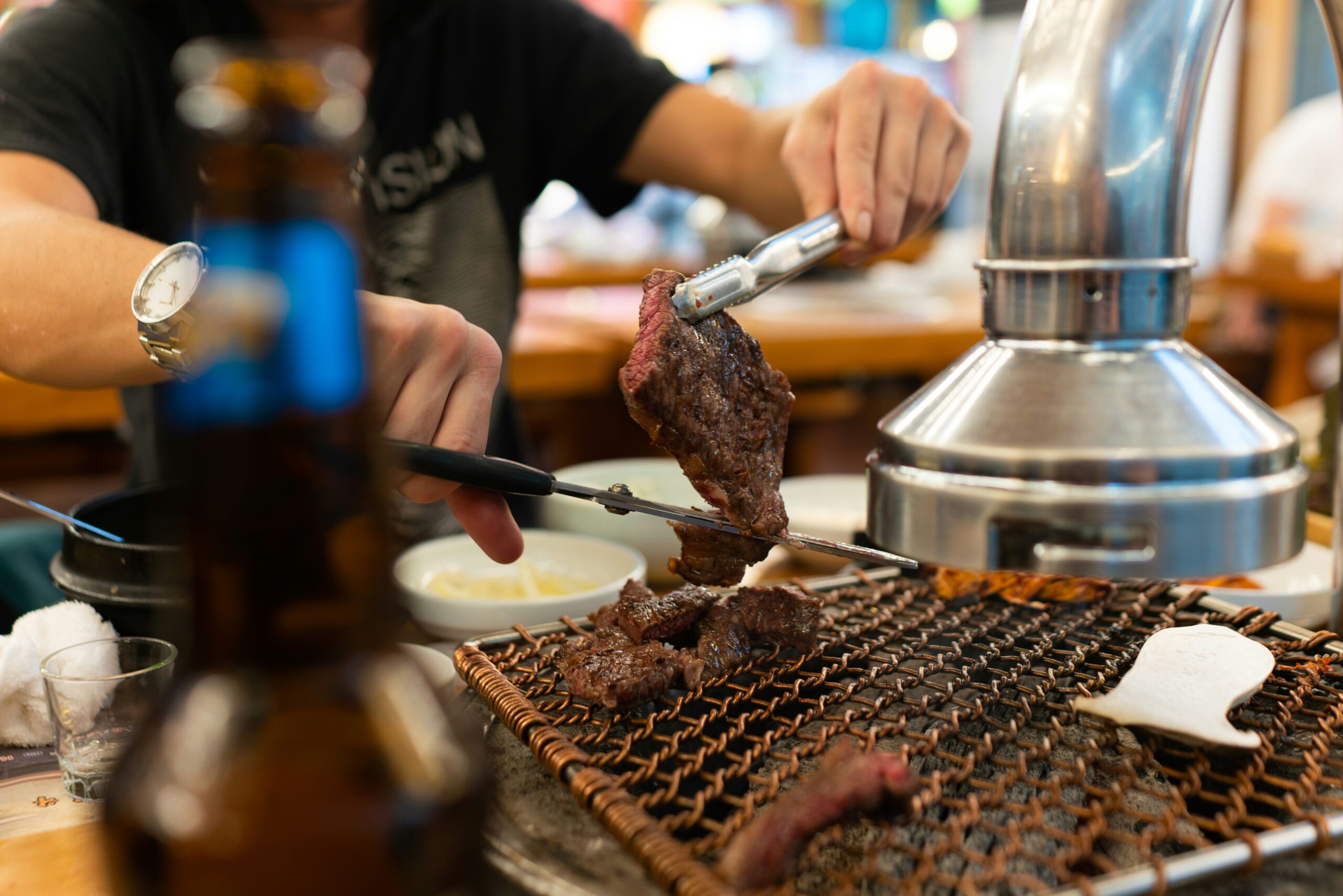
Korean barbecue is louder, smokier, more abundant, and more fun at a large table. The grill is often built into the table itself, sometimes charcoal, often gas or electric for practicality in high-volume restaurants. The ventilation hood descends from the ceiling. The banchan — the small side dishes — arrive in a fleet: kimchi, pickled vegetables, scallion salad, egg custard, fish cake, bean sprouts. The meal is designed for sharing, for the table to be covered in things, for eating in layers and combinations.
The signature preparation is marination. Bulgogi — thin-sliced beef in a marinade of soy sauce, Asian pear, garlic, sesame oil, and sugar — is probably the most internationally recognized Korean barbecue dish, its sweetness and tenderness designed for wide appeal. Galbi (short ribs) is marinated similarly, the meat butterflied along the bone for maximum surface area.
But Korean barbecue also features unmarinated meats: samgyeopsal (pork belly), chadolbaegi (beef brisket shaved thin), moksal (pork neck). These are eaten wrapped in perilla leaves or red leaf lettuce with a smear of ssamjang (a thick, fermented paste of doenjang and gochujang), raw garlic, green chili, and whatever banchan you want to stuff in. The wrap is the unit of Korean barbecue — the combination is the point.
Chinese BBQ: The Art of the Whole Animal
Chinese barbecue — siu mei in Cantonese — is fundamentally different in structure. It’s not primarily a tableside activity. It’s a craft tradition, practiced by specialists, producing finished products that you order sliced and plated.
The Cantonese roast masters who practice this tradition have specific technical domains. Char siu is the most famous export: pork shoulder or belly marinated in a mixture of soy sauce, honey, hoisin, five spice, and red fermented tofu, then roasted hanging in specialized ovens until the exterior caramelizes into a lacquered crust and the interior stays tender. The color — that particular red — is not food dye in a good version. It comes from the fermented tofu and the caramelization of sugars.
Siu yuk (roast pork) is the crackling specialist’s art: a whole side of pork with the skin scored, dried, seasoned with five spice and white pepper, then roasted at high heat until the skin blisters into a shattering, bubbly crackle. A good siu yuk skin is one of the great textures in all of food.
Whole roast duck and suckling pig complete the canonical siu mei lineup. These are ordered by the half or quarter, hacked to order on the chopping block, and served with steamed rice and a thin sweet sauce. The point is not the communal experience of cooking together. The point is the mastery of the person who cooked it before you arrived.
What They Share
All three traditions share a sophisticated relationship with fat, fire, and umami — the three elements that make meat taste like meat at its best. All three have a deep relationship with fermentation as a flavor foundation: soy sauce, miso, doenjang, fermented tofu, fermented black beans. All three reward serious attention: the difference between a mediocre and a great version of any of these dishes is enormous.
They also share the ability to be the best meal you’ve eaten in a while, if you find the right place and come hungry.
Food writers who have studied East Asian grilling traditions note that the differences between Japanese, Korean, and Chinese approaches reflect distinct culinary philosophies around heat, smoke, and seasoning. Read more: Serious Eats guide to Korean barbecue.
Frequently Asked Questions
What is the difference between Korean BBQ and Japanese BBQ?
Korean BBQ (gogi-gui) is characterized by marinated meats — particularly bulgogi and galbi — cooked at the table on built-in grills, served with extensive banchan side dishes, and eaten wrapped in lettuce with ssamjang paste. Japanese BBQ (yakiniku) emphasizes the quality of the meat itself — often high-grade wagyu — cooked in small portions on charcoal, with dipping sauces applied after rather than marinades before.
What is siu mei, the Chinese BBQ tradition?
Siu mei is Cantonese roast meat — a craft tradition practiced by specialist roast masters producing finished products like char siu (red roast pork), siu yuk (crackling roast pork), roast duck, and suckling pig. Unlike Korean and Japanese tableside BBQ, siu mei is prepared in advance in specialized ovens and ordered sliced at the restaurant.
What is char siu and how is it made?
Char siu is Chinese roast pork — typically pork shoulder or belly marinated in soy sauce, honey, hoisin, five spice, and red fermented tofu, then roasted hanging in specialized ovens until the exterior caramelizes into a lacquered crust. The characteristic reddish color comes from the fermented tofu and caramelized sugars, not food dye in quality preparations.
What should I order at my first Korean BBQ restaurant?
Start with samgyeopsal (pork belly) for an unmarinated option, bulgogi (thinly sliced marinated beef) for the classic sweet-savory experience, and galbi (short ribs) for the full Korean BBQ flagship dish. Order extra lettuce and perilla leaves for wrapping, and ask the server to help with the grill if you’re unfamiliar.