How to Order Korean BBQ: A Beginner’s Guide to the Cuts
The first time at a Korean barbecue table can be disorienting. There is a grill sunk into the table, a pair of scissors resting next to a plate of raw meat, and a dozen small dishes you did not order crowding every inch of space. The menu, meanwhile, is a wall of cuts you may not recognize. This guide is built to fix exactly that, so you can walk in and order Korean BBQ like you have done it a hundred times.
We have organized it the way the meal actually works: by what to order. Korean BBQ is meat first, and nearly every cut sorts into a simple grid, beef or pork, marinated or plain. Learn a handful of names in each corner and the wall of a menu turns into a short, manageable list.
How to think about the menu when you order Korean BBQ
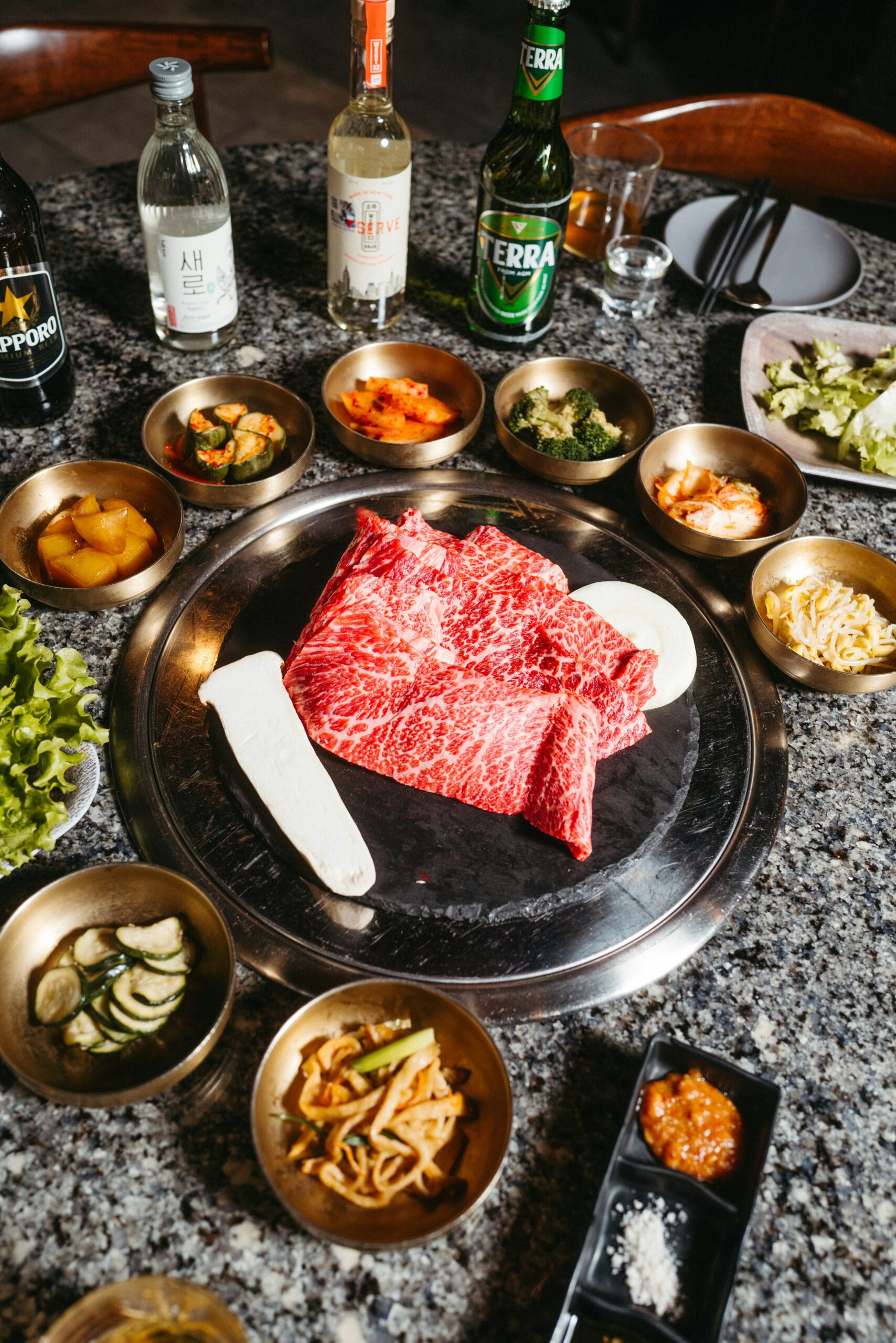
Before the specific cuts, one framework makes the whole menu legible. Korean BBQ meats fall into four quadrants: beef or pork, and marinated (yangnyeom) or unmarinated. Unmarinated cuts are salted lightly or dipped after grilling, letting the meat speak for itself. Marinated cuts carry a sweet, savory soy or gochujang glaze. When you order Korean BBQ, a good first order pulls from both sides: one unmarinated cut to taste the meat clean, and one marinated cut for contrast. Order at least two servings, since one inbun, a single portion, runs small by design.
The essential pork cuts
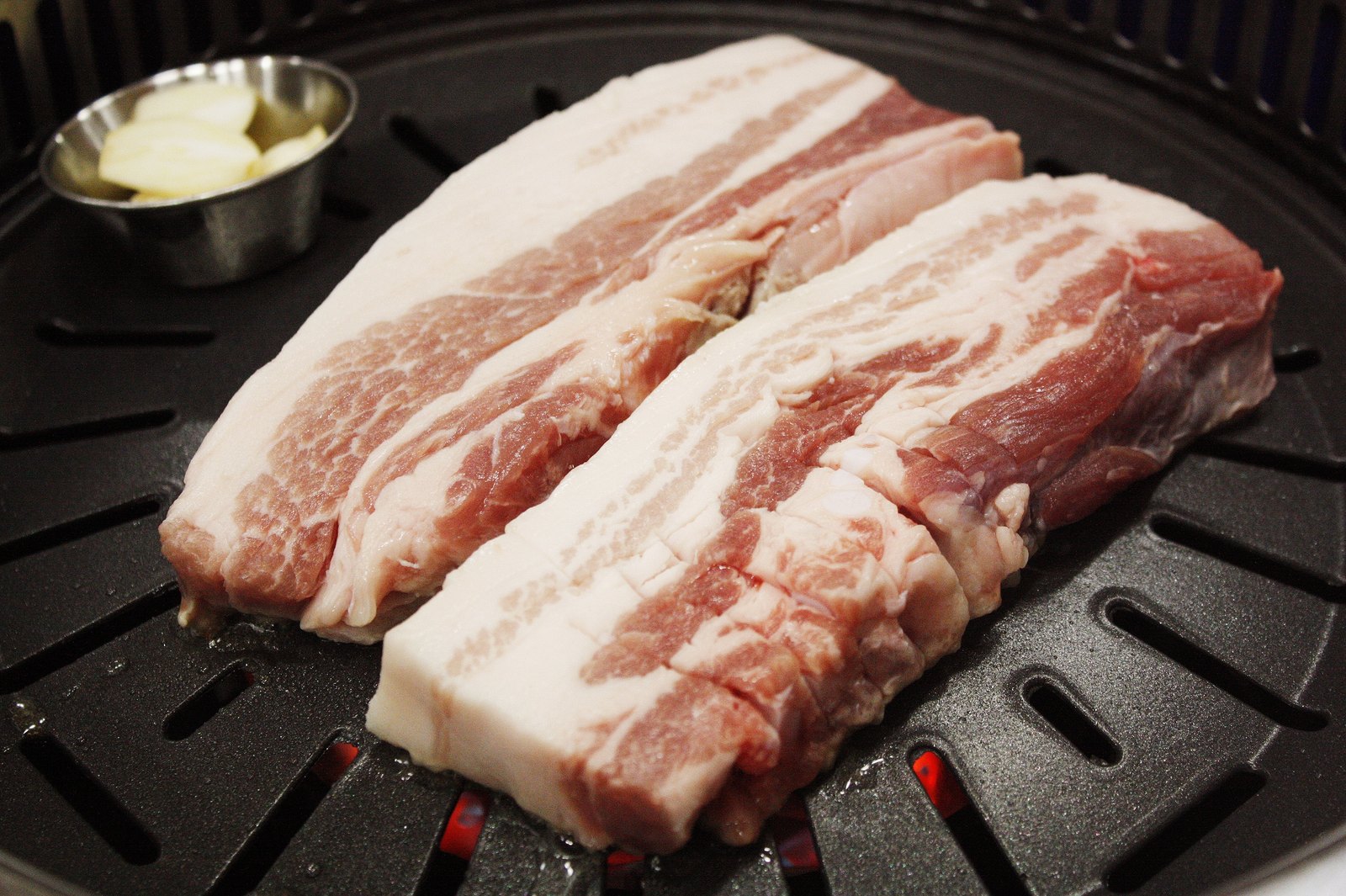
Samgyeopsal (pork belly) is the most popular grilling cut in Korea, more so than any beef. The name means three-layer meat, for the alternating bands of meat and fat, and it is served in thick, unseasoned slabs. Grill it until the fat renders and the edges crisp, then eat it plain or wrapped. If you order one thing your first time, order this.
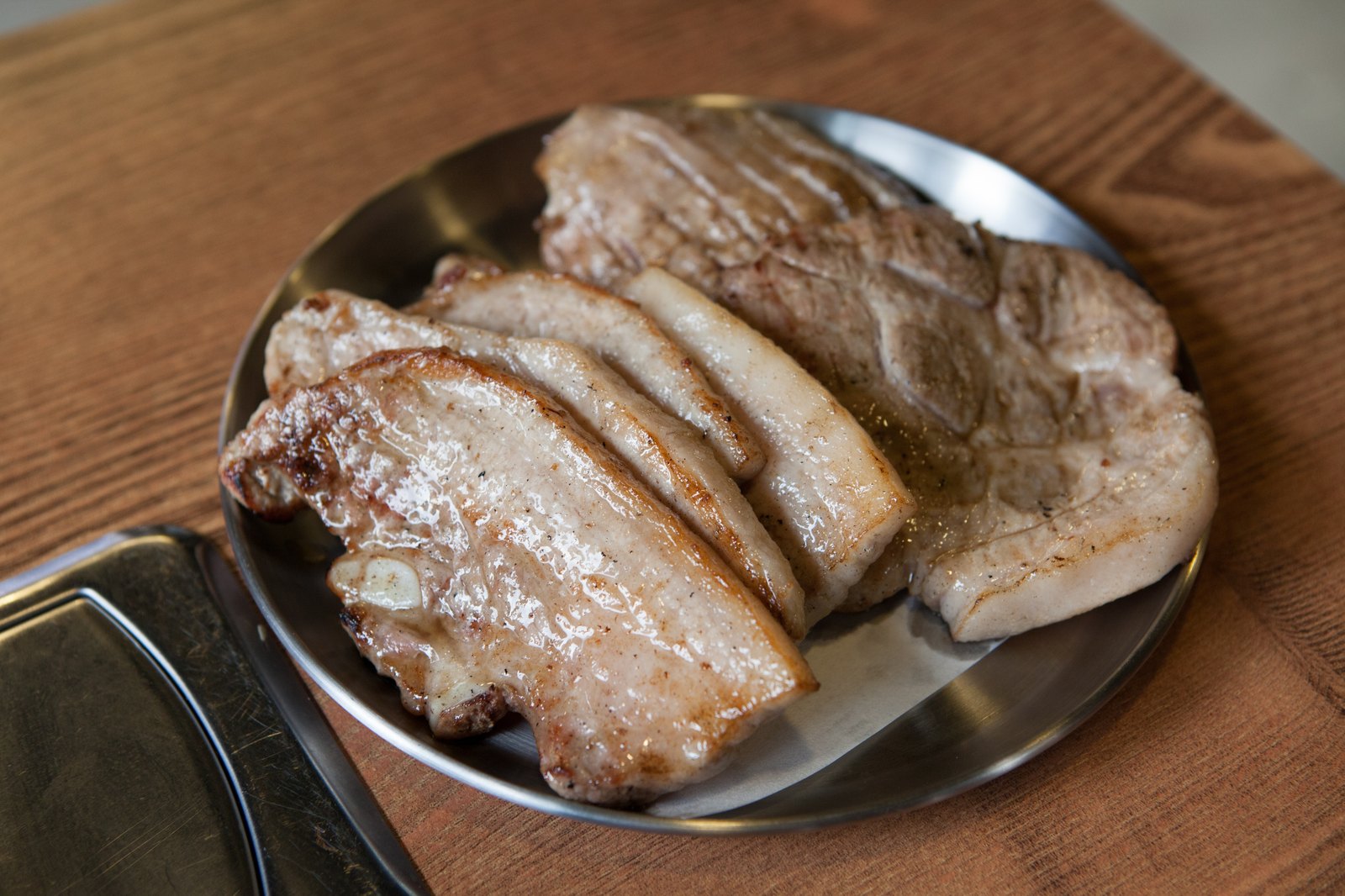
Moksal (pork neck or shoulder) is the leaner counterpart to belly. Less fat, still juicy, a little chewier, and a good choice if samgyeopsal reads as too rich. It wants a minute or two more on the grill than belly does.
Dwaeji galbi (marinated pork ribs) is the marinated corner of the pork quadrant, glazed in a sweeter, often gochujang-tinged sauce that is more assertive than its beef cousin. Because of the sugar, it chars fast, so watch it closely.
The essential beef cuts
Galbi (short ribs) is the beef centerpiece, and it comes two ways. LA galbi is cut flanken-style, thin across the bones, so it cooks quickly and is usually marinated in a soy, garlic, sesame, and Asian pear glaze that caramelizes beautifully. Wang galbi is the thick, bone-in cut, often unmarinated, for people who want to taste the beef itself. Either way, because it holds its shape, galbi makes the sturdiest wrap.
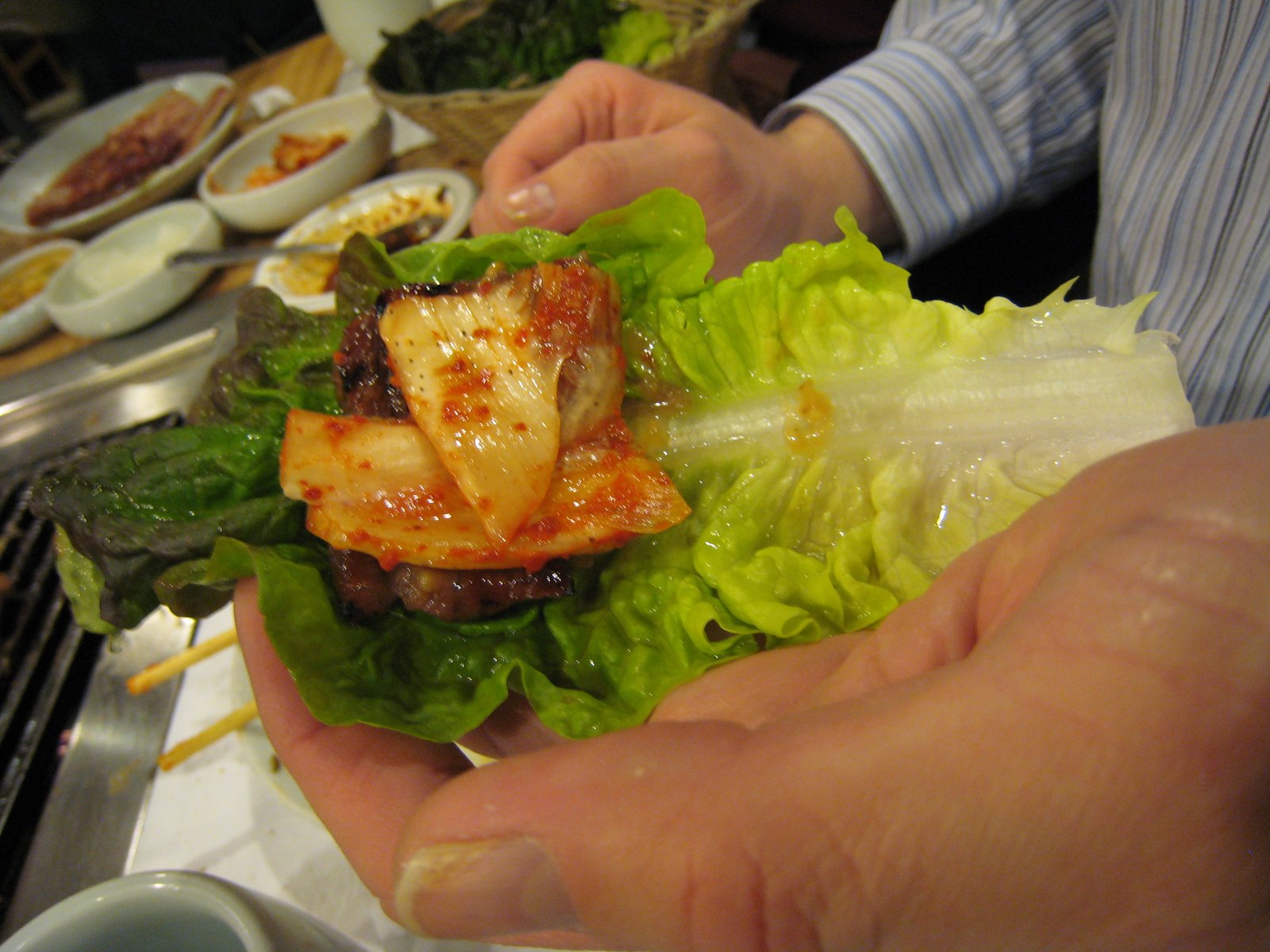
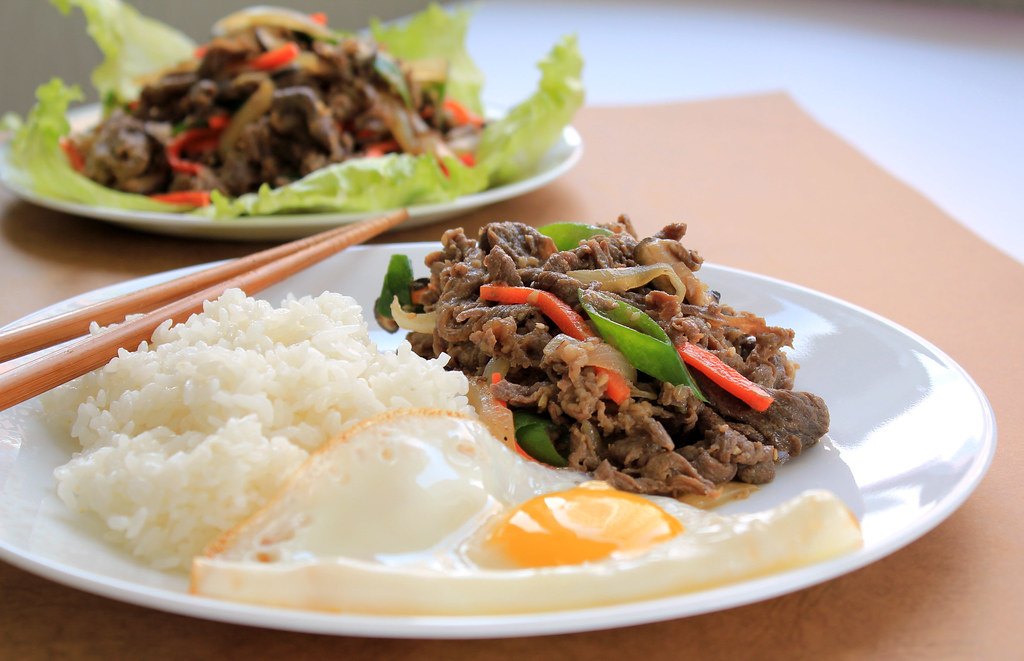
Bulgogi (thinly sliced marinated beef) means fire meat. Unlike galbi it is not a rib cut but lean beef sliced paper-thin and steeped in a sweet soy marinade. It cooks in seconds and skews sweeter and juicier, sometimes closer to saucy than charred. Where galbi tastes of beef first, bulgogi tastes of marinade and beef together.
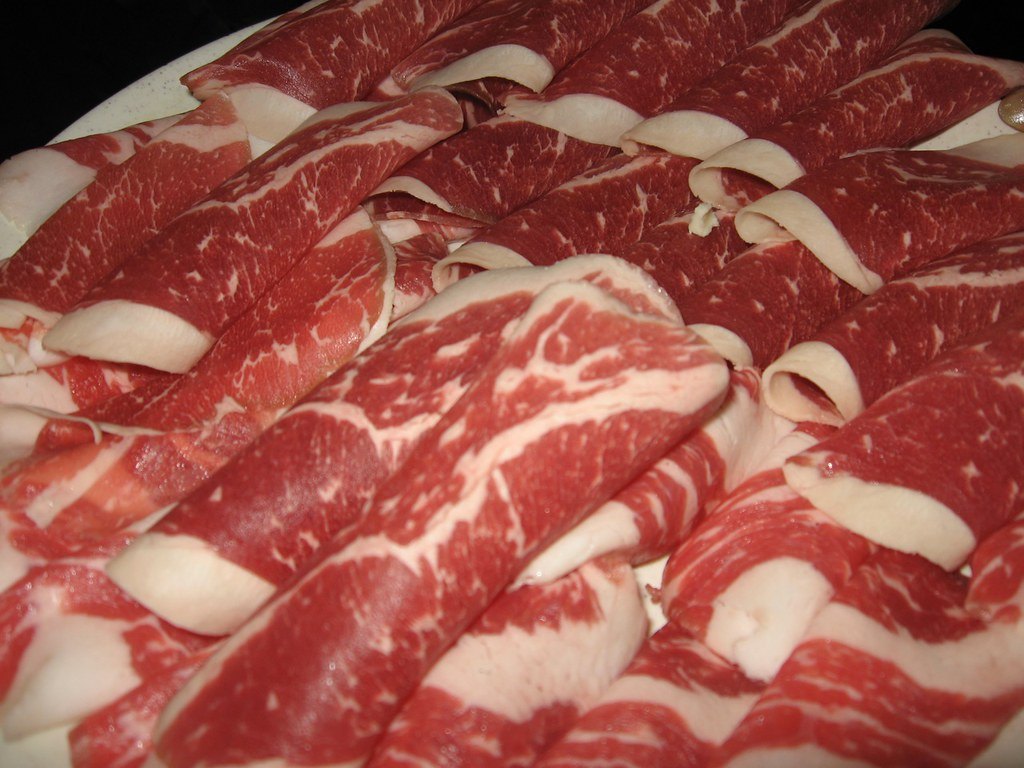
Chadolbaegi (thinly sliced brisket) is beef shaved almost translucent. It cooks in five to ten seconds and needs no marinade, dipped instead in sesame oil with salt and pepper the moment it leaves the grill. Because it cooks so fast, it is the cut most people accidentally burn, so stay on it.
For a splurge, look for deungsim (sirloin) or ansim (tenderloin), premium unmarinated steaks, and if the menu lists hanwoo, that is Korea’s prized native beef, richly marbled like wagyu and worth it.
Banchan: the free side dishes
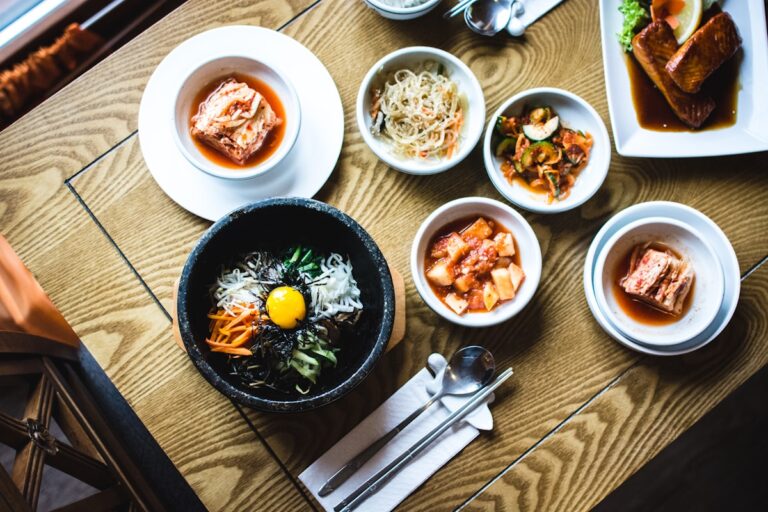
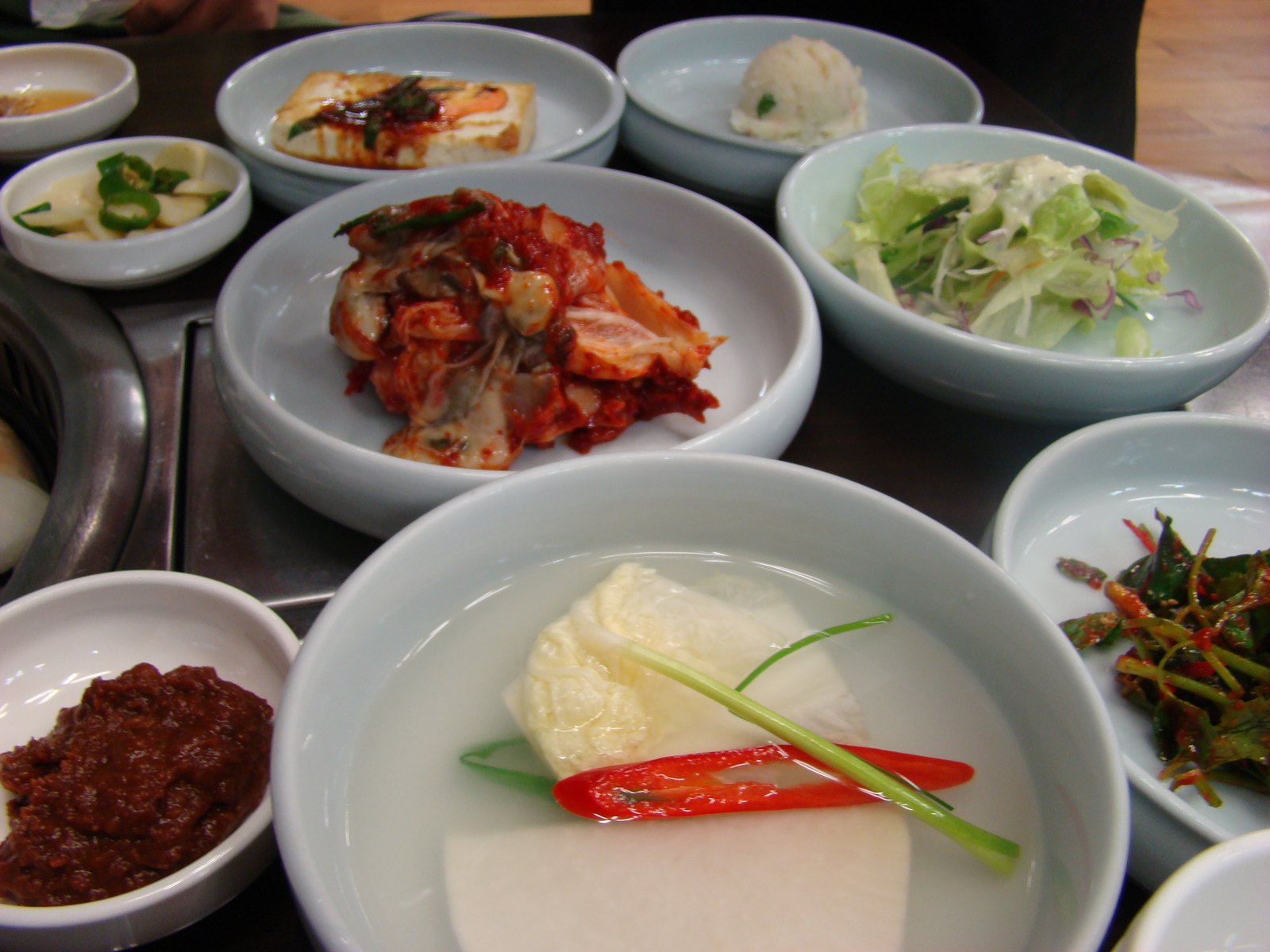
Before your meat arrives, the table fills with small plates. These are banchan, and they are complimentary and refilled as often as you like. Do not treat them as decoration or try to eat them in a set order. They exist to balance the meat: kimchi brings acidity, pickled radish cuts the fat, seasoned bean sprouts and scallion salad (pajeori) add freshness and sharpness. Some banchan, like kimchi and sliced kimchi, are even better thrown on the grill alongside the meat.
Ssam: how to build the wrap
The wrap, called ssam, is the heart of the meal and the thing first-timers most often overdo. The build is simple and the cardinal rule is firm: it is one bite, not two.
Lay a piece of lettuce flat in your palm, and add a perilla leaf on top if the table has them, for an earthy, aromatic second layer. Add one piece of grilled meat, a small dab of ssamjang (the thick, salty paste of fermented soybean and chili), a sliver of garlic, and a bit of scallion salad or kimchi if you like. Fold it into a small packet and eat the whole thing in one go.
If it feels too big for one bite, use less next time rather than biting it in half, which is exactly where the wrap falls apart. A dab of ssamjang, not a spoonful, or it drowns the meat.
Grilling and table etiquette
A few mechanics separate a smooth meal from a fumbling one. At many restaurants the staff will grill for you, flipping and cutting the meat with scissors, and that is normal service, not something to wave off. Where you grill yourself, a few rules help.
Use the scissors, not a knife, to cut cooked meat into bite-sized pieces right on the grill. Move finished pieces to the cooler edge so they stay warm without burning while the next batch cooks. Do not rush the pork belly; the crisp, caramelized edges are the best part. And if the grill plate gets charred and smoky, it is completely fine to ask your server to swap it, a request that instantly marks you as someone who knows the drill. When pouring drinks, use both hands to serve and to receive, a small courtesy that matters at a Korean table.
A first order that works
Put it together and a foolproof way to order Korean BBQ for two looks like this: samgyeopsal to start, one marinated cut such as LA galbi or bulgogi for contrast, and the banchan that arrives free. Grill the belly first while you build your technique, wrap a piece in lettuce with a dab of ssamjang, and go from there. Add a chadolbaegi or a serving of rice if you are still hungry. That is the entire game.
Once the grid clicks, the rest of the Asian dining table opens up too. Our beginner’s guide to what to order at dim sum decodes another cart-and-small-plates ritual, and when you are ready to find a table, our roundups of the best Korean restaurants in the DC metro and San Diego’s Convoy District are good places to put this to use.
Frequently asked questions
What should you order first at Korean BBQ?
Start with samgyeopsal, unmarinated pork belly, which is the most popular cut in Korea and the easiest to grill well. Add one marinated cut like LA galbi or bulgogi for contrast. Order at least two servings, since a single portion is small.
What is the difference between galbi and bulgogi?
Both are marinated beef, but galbi is short rib, thicker and beefier, so you taste the meat first. Bulgogi is lean beef sliced paper-thin, so it is sweeter and softer and tastes of the marinade and beef together. Galbi also makes a sturdier lettuce wrap.
Are the side dishes at Korean BBQ free?
Yes. The small plates, called banchan, come complimentary with the meal and are refilled as often as you want. They are there to balance the richness of the grilled meat, not as a separate course.
How do you eat a Korean BBQ lettuce wrap?
Lay a piece of meat on a lettuce leaf, add a perilla leaf if available, a small dab of ssamjang, and a sliver of garlic, then fold it and eat the whole wrap in one bite. Building it too big to eat in one go is the most common first-timer mistake.
Do you grill the meat yourself?
Sometimes. At many restaurants the staff grill and cut the meat for you, which is normal. At others you grill your own at the table, using scissors to cut cooked meat and moving finished pieces to the edge of the grill to keep them from burning.