Where to Eat Local Food in Honolulu: A Guide for Mainland Visitors
Local food Honolulu visitors most often miss is not the resort buffet, the Waikiki happy hour, or the tourist-targeted “Hawaiian” dinner shows. It’s the food O’ahu locals actually eat — plate lunches at counters near the airport, traditional Hawaiian meals at Kalihi family restaurants, poke from neighborhood seafood markets, and saimin from late-night counters that have been serving the same broth for fifty years. The local food scene in Honolulu is the product of a uniquely layered culinary history: Native Hawaiian traditions, plantation-era Japanese and Filipino and Chinese and Portuguese and Korean influences, post-statehood American fast-food adaptations, and the contemporary chef-driven scene that grew out of all of it. The result is one of the most distinctive regional American food cultures, and one that mainland visitors usually leave Honolulu without having properly encountered. Here are five places that should anchor any serious local-food-focused trip — chosen for their authenticity, their consistency, and their accessibility to first-time visitors.
Helena’s Hawaiian Food
Kalihi · 1240 N School Street
Helena’s Hawaiian Food has been the standard for traditional Hawaiian cooking in Honolulu since 1946, when Helen Chock opened it on North King Street. In 2000, the James Beard Foundation awarded it the Regional Classic Award — one of only a handful of Hawaii restaurants to receive the distinction. The restaurant moved to its current Kalihi location at 1240 North School Street and is now run by Helen’s grandson, Craig Katsuyoshi. The menu reads like a primer on classical Hawaiian food: pipikaula short ribs (the house specialty, glossy and salt-cured), kalua pig, laulau (pork and butterfish wrapped in lu’au and ti leaves, steamed), squid lu’au, lomi salmon, and poi. The set menu — small portions of multiple dishes — is the right order for first-time visitors. The room is unpretentious. The food is exactly as good as the reputation suggests. 1240 N School Street.
Rainbow Drive-In
Kapahulu · 3308 Kanaina Avenue
Rainbow Drive-In has been on the same Kapahulu corner since 1961 and is the city’s archetypal plate-lunch institution. The plate lunch — two scoops of white rice, one scoop of macaroni salad, and a protein — is Hawaii’s defining everyday meal, descended from the bento boxes plantation workers carried to the cane fields. Rainbow’s version is the version many locals grew up on. The loco moco (hamburger patty over rice, topped with a fried egg and brown gravy) is the dish to order if you’ve never had one. The mixed plate — BBQ beef, BBQ chicken, mahi-mahi — is the order if you want to sample the range. Eat at one of the picnic tables out front. The line moves fast. 3308 Kanaina Avenue.
Highway Inn
Kakaʻako · 680 Ala Moana Boulevard #105
Highway Inn is the more polished, more accessible cousin to Helena’s — serving the same canon of traditional Hawaiian dishes (kalua pig, laulau, lomi salmon, poi) in a brighter, more modern dining room in the Kaka’ako neighborhood near downtown. The Toguchi family has run the restaurant since 1947, with the current Kaka’ako location opened in 2013 as a second outpost of the original Waipahu shop. Highway Inn is the right pick for mainland visitors who want to try traditional Hawaiian food but want a slightly less plunge-into-the-deep-end environment than Helena’s offers. The mixed plate, with kalua pig and laulau and pipikaula, covers most of the regional bases in one order. 680 Ala Moana Boulevard #105.
Alicia’s Market
Kalihi · 267 Mokauea Street
Alicia’s Market is a small Kalihi neighborhood market and lunch counter that has been family-run since 1949 and is widely considered one of the best places in Honolulu for both poke and plate lunches. The poke counter rotates fresh — shoyu ahi, spicy ahi, limu, sometimes tako — and the local mixed plate, with char siu pork, roast pork, and garlic chicken, is the one regulars send out-of-towners to try. The store rebuilt after a fire because the neighborhood demand was too persistent to ignore. Cash-friendly, no-frills, almost zero tourist traffic. 267 Mokauea Street.
Fresh Catch
Kapahulu · 1113 Kapahulu Avenue
Fresh Catch is the modern poke pick — a brick-and-mortar seafood shop with a counter, several locations across O’ahu, and a reputation among local poke obsessives for some of the cleanest, freshest poke in the city. The spicy ahi, the shoyu poke, the smoked tako, and the limu poke are all worth ordering, and the ahi katsu (panko-crusted seared tuna) is the off-menu order locals know to ask for. Poke is one of those dishes that has been so completely co-opted by the mainland that visitors often don’t realize how different the Hawaii version is from what they’ve had elsewhere. Fresh Catch is the right corrective. O’ahu locations in Kapahulu (1113 Kapahulu Ave) and Kaneohe.
Local Food Honolulu: How to Build a Trip Around It
The five restaurants above are starting points, not a complete map. If you’re planning a Honolulu trip with eating as the priority, three additional notes worth knowing.
First, the heart of O’ahu’s local food scene is not in Waikiki. Kalihi, Kapahulu, Kaka’ako, and the neighborhoods west of downtown are where most of the institutions are. Rent a car or rideshare. The geography is the obstacle most visitors don’t understand until they arrive.
Second, the plate lunch is the right cultural unit. One plate, eaten at a counter or a picnic table, with rice and macaroni salad and a protein, is how most O’ahu locals eat lunch on most days. Building a trip around three or four plate-lunch counters and a traditional Hawaiian sit-down meal will produce a deeper understanding of the food than any luau or resort dinner.
Third, the local distinction between “Hawaiian food” and “Hawaii food” matters. Hawaiian food means the Native Hawaiian dishes — kalua pig, laulau, lomi salmon, poi. Hawaii food is the broader plate-lunch culture that grew out of plantation-era multi-ethnic mixing. Both are essential. Both are different. The five restaurants above cover both.
Local Food Honolulu: One More Thing
The eating story of Honolulu is bigger than these five restaurants, and bigger than this list could fairly cover. Da Ono Hawaiian Food (Kapahulu, formerly Ono Hawaiian Foods), Yama’s Fish Market (Mō’ili’ili), and Liliha Bakery (multiple locations) all deserve serious consideration in any longer trip. The malasada at Leonard’s Bakery. The shave ice at Waiola. The musubi at Mana Musubi. If you’ve enjoyed our guide to Vietnamese restaurants in Houston or Korean restaurants in the DC metro area, you’ll recognize the pattern here: the visible tourist-facing food scene is not the same scene that locals actually use. The five restaurants above are the locals’ scene. Start there and the rest of the city’s food culture becomes legible.
Frequently Asked Questions
What’s the difference between Hawaiian food and Hawaii local food?
Hawaiian food refers to the traditional dishes of Native Hawaiian cuisine — kalua pig, laulau, lomi salmon, poi, pipikaula, squid lu’au. Hawaii local food (or “Hawaii food”) is the broader plate-lunch culture that developed during the plantation era, blending Japanese, Filipino, Chinese, Korean, Portuguese, and American influences with Native Hawaiian dishes. Plate lunches, loco moco, saimin, spam musubi, and poke fall into the Hawaii food category. Both are essential to understanding what people in Honolulu actually eat.
Where do locals in Honolulu eat lunch?
Most O’ahu locals eat lunch at plate-lunch counters near work or in their home neighborhood. Rainbow Drive-In, L&L Hawaiian Barbecue (the local chain), Alicia’s Market, Tanioka’s Seafoods, and Zippy’s are all part of the everyday rotation. The unifying feature is the format: rice, macaroni salad, one or more proteins, served fast, eaten at picnic tables or in cars.
Is poke in Hawaii different from poke on the mainland?
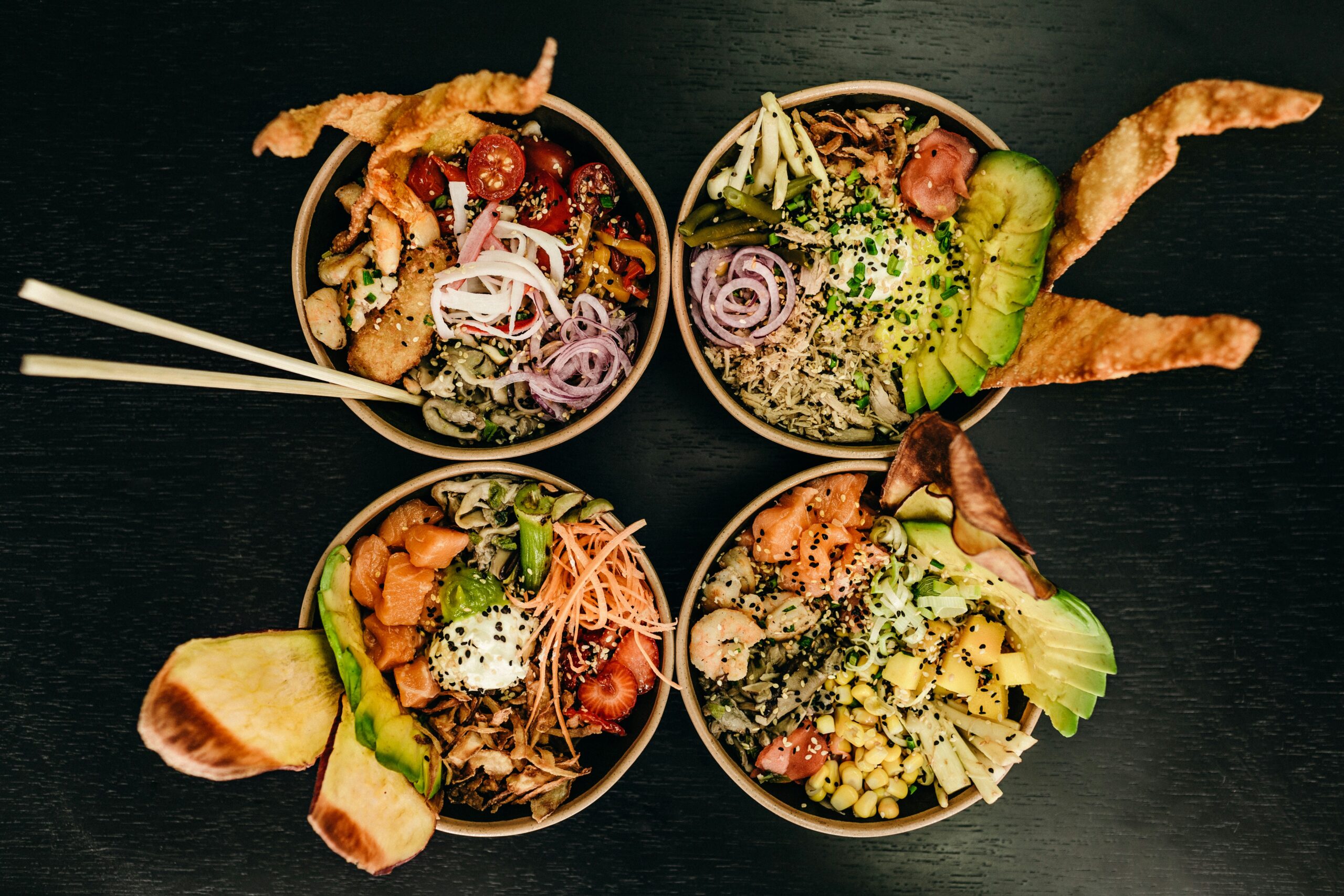
Yes, significantly. Hawaii poke is typically sold by weight from refrigerated counters at neighborhood seafood markets, served alone or with rice, in styles that emphasize cleanly cut high-quality fish and minimal added ingredients (shoyu, sesame oil, green onion, limu seaweed, salt). Mainland poke bowls are usually customized rice-and-vegetable bowls with poke as one component. The Hawaii version is closer to sashimi than to a salad bowl.
Do I need a car to eat well in Honolulu?
For the kind of eating described above, yes. Most of the restaurants that matter are in Kalihi, Kapahulu, Kaka’ako, and the neighborhoods west of Waikiki — not within walking distance of major hotels. A rental car for the food-focused days of your trip is the right approach. Rideshare also works for individual restaurant visits but is less efficient for a multi-stop food day.