The Best Asian American Restaurants in New York City Right Now
The best Asian American restaurants New York City has right now are not a cuisine category — they are a sensibility. These are chefs who trained in the world’s finest kitchens and then built something that could only have come from a specific combination of inheritance and American upbringing. The result is a dining scene as diverse as the city itself: Korean American tasting menus in Flatiron, Taiwanese American bakeries in Williamsburg, Chinese American fried chicken in Brooklyn, a Chinatown institution that has outlasted a century of trends. This guide covers the Asian American Restaurants New York City doing something genuinely new with what they were given.
Atomix — Flatiron
Junghyun Park and his wife Ellia Park have built one of the most significant restaurants in New York at Atomix, a two-Michelin-star Korean tasting menu in the Flatiron District. Each course arrives with a card contextualizing the dish within Korean culinary history — an approach that treats the meal as education without being didactic. The cooking draws on classical Korean techniques and ingredients filtered through years of fine dining training. The result is a tasting menu that sits comfortably among the best meals you can have anywhere in the United States. The Parks also operate Atoboy, a more casual Korean banchan restaurant at a fraction of the price, and Naro, a newer wood-fired concept. Together they have built the most coherent Korean American fine dining operation in the country.
Win Son and Win Son Bakery — Williamsburg
Win Son opened in Williamsburg in 2016 and became one of the most important restaurants in Brooklyn. Josh Ku and Trigg Brown built a Taiwanese American dining room that felt immediately essential — scallion pancakes, three-cup chicken, braised pork rice, the kind of food deeply familiar to the people it comes from and genuinely surprising to everyone else. Win Son Bakery, with locations in Williamsburg and on Second Avenue in Manhattan, has become its own destination — serving Taiwanese American pastries, scallion pancake breakfast sandwiches, and coffee that holds up against any dedicated cafe in the city.
Pecking House — Park Slope and Two Bridges
Eric Huang grew up in his family’s Chinese restaurant in Queens, trained at Michelin-starred kitchens including Eleven Madison Park, and built Pecking House almost entirely by accident during the pandemic. His Sichuan chili country fried chicken draws on childhood memory, fine dining technique, and the specific experience of being Chinese American in New York. Pecking House now has a Park Slope location and a second outpost in Two Bridges, Manhattan. The fried chicken is among the best in the city.
Nom Wah Tea Parlor — Chinatown
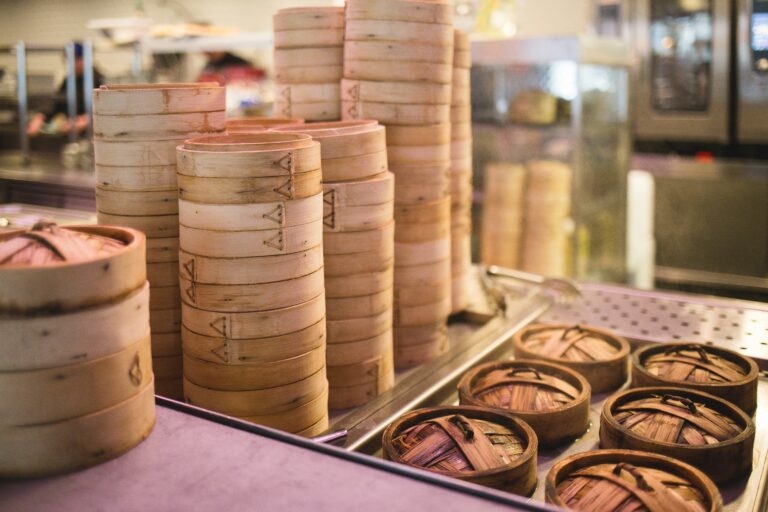
Nom Wah has occupied Doyers Street in Manhattan’s Chinatown since 1920 — New York’s oldest dim sum restaurant. Wilson Tang took over from his uncle in 2010 and expanded the brand to multiple locations without compromising the original. The har gow, siu mai, and egg rolls are definitive. What Tang has built is a model for how a Chinese American family business transitions across generations: not as nostalgia but as an institution that continues to earn its place.
Hanoi House — East Village
Hanoi House in the East Village serves northern Vietnamese food with a specificity that made it one of the most celebrated Vietnamese restaurants in New York. The pho reflects northern Vietnamese tradition — a cleaner, more restrained broth than the southern-style bowl most New York restaurants serve. The menu extends to bun cha, banh cuon, and other Hanoi dishes that few other New York Vietnamese restaurants attempt with comparable seriousness.
New York’s Asian American dining landscape is documented extensively by Eater New York, which tracks the city’s most significant openings and the communities behind them. Read more: Eater New York.
Asian American Restaurants New York: One More Thing
The Asian American restaurants New York has produced over the past two decades represent only part of the story. The Flushing-to-Sunset Park-to-East Village axis contains dozens more worth a meal, from the Sichuan specialists in Queens to the modern Filipino scene downtown. If you’re exploring Asian American food cities beyond New York, our guides to Vietnamese restaurants in Houston, Filipino restaurants in Seattle, and Chinese restaurants in Chicago map similar territory in other regional Asian American food scenes.
Frequently Asked Questions
What are the best Asian American Restaurants New York City?
The best Asian American restaurants in New York City right now include Atomix (two-Michelin-star Korean tasting menu in Flatiron), Win Son and Win Son Bakery (Taiwanese American in Williamsburg), Pecking House (Chinese American fried chicken in Park Slope and Two Bridges), Nom Wah Tea Parlor (dim sum institution in Chinatown since 1920), and Hanoi House (northern Vietnamese in the East Village).
Is Atomix worth the price?
Atomix holds two Michelin stars and is widely considered one of the best tasting menu experiences in New York City. Atoboy next door offers the same culinary seriousness at a significantly lower price point.
Where is Win Son Bakery located?
Win Son Bakery has two locations: 164 Graham Avenue in Williamsburg, Brooklyn, and 23 Second Avenue in Manhattan’s East Village. Both are open seven days a week.
What should I order at Nom Wah Tea Parlor?
The essential orders are the har gow, siu mai, and egg rolls. Nom Wah has served these dishes for over a century and they remain the benchmark for Chinatown dim sum.
What makes a restaurant Asian American rather than simply Asian?
Asian American restaurants are built by chefs whose identity was shaped by growing up in the United States — cooking that reflects both inherited culinary tradition and the specific experience of living between two cultures, inflected by American ingredients, dining culture, and a distinctly American relationship to the ancestral cuisine.