The Best Asian American Restaurants in the Bay Area Right Now
The best Asian American restaurants Bay Area has to offer span one of the oldest and most layered food cultures in the United States. Chinese immigrants arrived with the Gold Rush. Japanese Americans farmed the Central Valley before internment upended those communities entirely. Filipino laborers built the Alaskan salmon canneries. Vietnamese refugees rebuilt their lives in San Jose and along the peninsula. What has grown from these overlapping histories is a food landscape that is simultaneously one of the most diverse and one of the most underappreciated in the country. These are the best ones right now.
Mister Jiu’s — San Francisco Chinatown
Brandon Jew opened Mister Jiu’s in San Francisco’s Chinatown in 2016 and built something the neighborhood had not seen in its modern form: a Michelin-starred, James Beard Award-winning restaurant that took its Chinese American inheritance as seriously as any other culinary influence. The cooking is contemporary Chinese American — Cantonese tradition reimagined through California ingredients, modern technique, and Jew’s experience of growing up in San Francisco’s Chinese community. The mapo tofu is rendered in a way that makes you rethink how many times you have eaten a lesser version. The restaurant’s location in the heart of a Chinatown facing decades of disinvestment is not incidental — Jew has been vocal about the restaurant as a commitment to the neighborhood.
Burma Superstar — San Francisco and Oakland
Burma Superstar has been one of the defining restaurants of San Francisco since it opened on Clement Street in the Inner Richmond in 1992. The tea leaf salad — lahpet thoke, the national dish of Myanmar — is the single most important dish in the history of Burmese food in America: the item that introduced a cuisine to a country with almost no prior relationship with it. The samusa soup and the rainbow salad have followed in cultural significance. The waits remain long because they do not take reservations and nothing about the quality has changed. The Oakland location offers the same menu with somewhat shorter queues.
Lao Table — San Francisco
Lao Table is one of the few restaurants in the country built specifically around Laotian cuisine, a cooking tradition that has remained largely invisible in American dining even as Thai and Vietnamese food have become familiar. Chef Lalita Souksamlane, who grew up in northeast Thailand near the Lao border and spent twenty-seven years running Osha Thai across San Francisco before opening Lao Table in 2016, presents the food of her home region with a contemporary hand. The papaya salad arrives properly pounded and properly fierce. The panang lamb curry, featured by Bay Area food television and frequently the table’s most-ordered dish, is built on a curry paste made in-house from scratch. Laotian food is one of the great underrepresented cuisines in America. Lao Table is one of the few places giving it the room it deserves.
Kin Khao — San Francisco
Pim Techamuanvivit opened Kin Khao in the Parc 55 Hotel in Union Square and earned a Michelin star for Thai cooking that refused to cater to what most Thai American restaurants had trained themselves to believe their customers wanted. The food is regional Thai — from Chiang Mai, from the Isaan plateau, from the south — rather than the pan-Thai menu most American cities accept as the default. The relentless sourcing of Thai ingredients and the refusal to compromise on flavor for accessibility made it one of the most important Thai restaurants in the country.
Tay Ho — Oakland
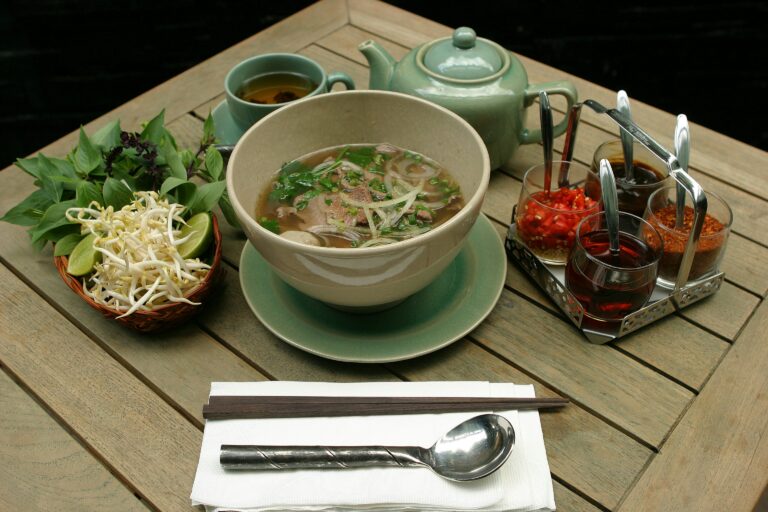
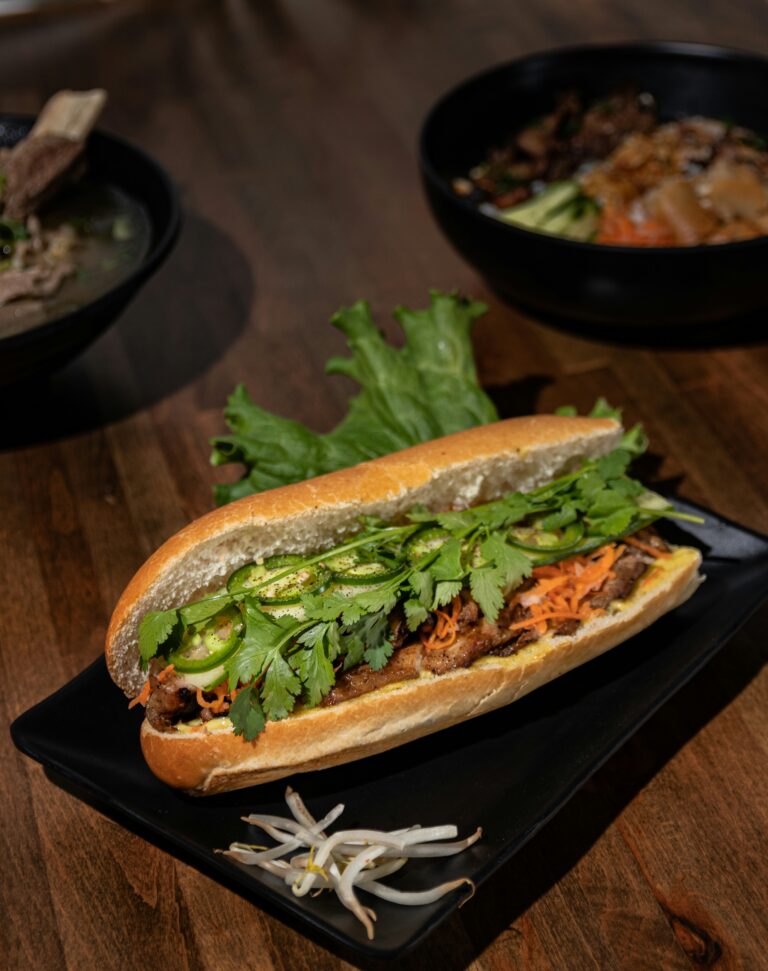
Tay Ho is one of the most quietly distinctive Vietnamese restaurants in the Bay Area, a mother-daughter operation in Oakland Chinatown that has spent fifteen years deepening rather than expanding. Denise Huynh bought the restaurant from her aunt in 2010 and convinced her mother Anna to lead the kitchen, where she cooks the regional Vietnamese dishes Denise grew up eating — Northern banh cuon (delicate hand-rolled rice noodles) that often sell out by mid-afternoon, Hue-style chewy dumplings, Mekong Delta fish curry, and pho built on Mary’s organic free-range chicken. The bar program is unusually thoughtful for a small Vietnamese restaurant, with a pho-spice-infused bourbon cocktail called the Hanoi Hipster and Asian-influenced drinks built around lychee and jasmine tea. Tay Ho is the kind of restaurant that rewards repeat visits and resists easy summary, which may be why it has remained a beloved East Bay anchor without becoming a destination.
China Live — San Francisco Chinatown
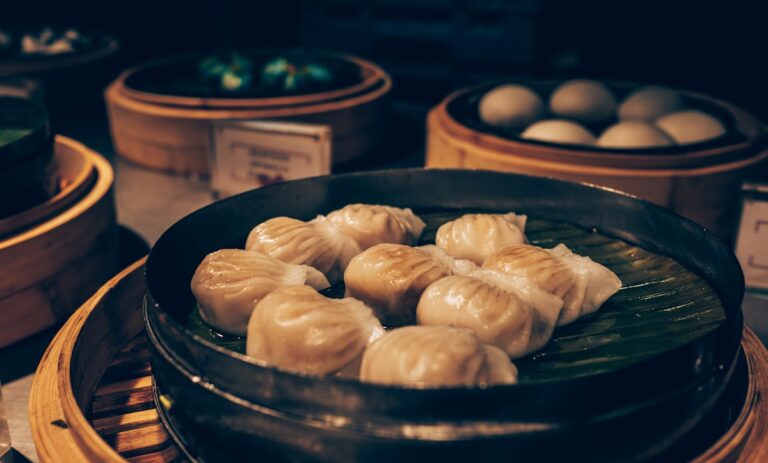
China Live is the most ambitious Chinese American restaurant project in the country, a thirty-thousand-square-foot multi-concept building opened by George Chen and Cindy Wong-Chen in 2017 on the border of Chinatown and North Beach. The complex contains a casual Market Restaurant on the ground floor, an upscale cocktail bar (Cold Drinks Bar) and the fine dining destination Eight Tables by George Chen on the second floor, plus a retail marketplace selling the imported ingredients and house-made products central to the kitchens. George Chen, who founded the influential Betelnut in 1995 and spent thirteen years operating restaurants in China before returning to build China Live, has spent his career pushing back against the American perception of Chinese food as cheap and uniform. Eight Tables earned a place on Time Magazine’s first-ever “World’s Greatest Places” list, one of only twenty-one restaurants worldwide on the inaugural roster, and China Live itself was named Eater San Francisco’s Restaurant of the Year in 2017. The Chens’ new concept, Asia Live, opens at Westfield Valley Fair in Santa Clara on June 1, 2026, extending the China Live model to a pan-Asian framework in Silicon Valley.
The Bay Area’s Asian American culinary history has been documented in depth by KQED, whose food coverage traces the evolution of the region’s most significant restaurants. Read more: KQED Food.
Frequently Asked Questions
What are the best Asian American restaurants in the Bay Area?
The best Asian American restaurants in the Bay Area right now include Mister Jiu’s (Michelin-starred Chinese American in San Francisco’s Chinatown), Burma Superstar (Burmese American institution in San Francisco and Oakland), Kin Khao (Michelin-starred regional Thai in San Francisco), Lao Table (contemporary Laotian cuisine in San Francisco), Tay Ho (regional Vietnamese, mother-daughter operation in Oakland Chinatown), and China Live (George Chen’s thirty-thousand-square-foot Chinese American culinary destination in San Francisco Chinatown).
Does Mister Jiu’s have a Michelin star?
Yes. Mister Jiu’s holds one Michelin star and Chef Brandon Jew has won the James Beard Award for Best Chef: California. Reservations are available through Resy.
What should I order at Burma Superstar?
The essential orders are the tea leaf salad (lahpet thoke), samusa soup, and rainbow salad.
Does Burma Superstar take reservations?
Burma Superstar does not take reservations. Both the San Francisco and Oakland locations operate on a walk-in basis.
Is George Chen opening a new restaurant?
Yes. George Chen and Cindy Wong-Chen, the team behind China Live, are opening Asia Live at Westfield Valley Fair in Santa Clara on June 1, 2026. The fifteen-thousand-square-foot, two-story destination extends the China Live model to a pan-Asian culinary framework and includes a marketplace, full-service restaurant, cafe, bar, outdoor patio, and rooftop terrace.
What city in the Bay Area has the best Asian American food scene?
San Francisco has the most visible fine dining Asian American restaurants, anchored by Mister Jiu’s, Kin Khao, and the multi-concept China Live in Chinatown. Oakland has a strong Asian American food culture, particularly for Southeast Asian cuisine. San Jose has the largest Vietnamese American community in the Bay Area and a dense restaurant ecosystem in its Little Saigon neighborhood.